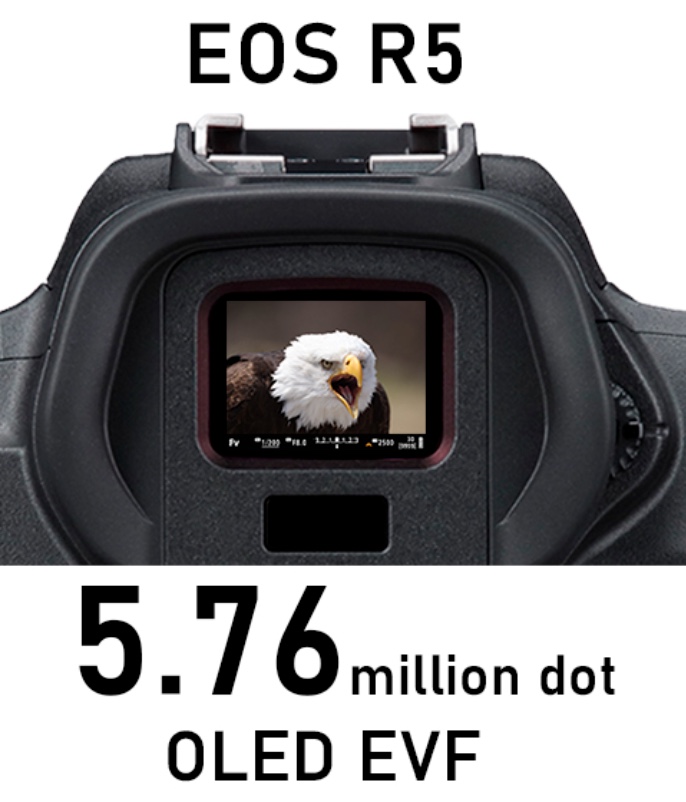
For the past year, I’ve been using the Canon EOS R5 as my primary stills camera. It is a superb piece of equipment, carefully engineered to fulfill all of my wildest dreams for stills photography. I purchased it for what will become a recurring theme for me – how to make photography more convenient.
As I get older, there are aspects of photography such as the tracking of moving subjects, the determination of tack sharp focus, remembering to switch from high ISO back to normal ISO, remembering to switch from single shot to continuous shooting and back, that could use a little help. The Canon EOS R5 provides that to me exceptionally well.
Its large, high resolution viewfinder allows me to arrange all of the important shooting information around the edge of the frame without affecting the ability to see the subject clearly. That’s what defines a mirrorless camera frankly and separates it from a DSLR. That clear view of the subject and the settings allows me to set up the shot easily even with my diminishing vision, and when I can’t, there are built-in warnings and colour overlays to help me.
Likewise, the LCD is big, bright, rotatable to any angle that saves my aging back and knees, and yet lets me get the camera into the right angle to capture any scene, no matter how high or how low.
I can customize essentially every button and dial to perform the function that works for me, I can set up and save custom shooting settings that give me everything from landscape setups to close up to action setups at the flick of a button. And I can save out all my customizations to a file to store remotely, in case something causes the camera to need a reset.
Sounds like a gem, doesn’t it. It’s fast, light, smart and takes pretty pictures too. It even shoots video.
Say what? Shoots video. But the title of this blog is that it is not a video camera. Read on, intrepid friend.
Continue reading “The Canon EOS R5 is NOT a Video Camera!” →




 Even more baffling is sharpening. Related to but opposite in intent to managing noise, applying sharpening leaves me even more puzzled, since I often see little to no change in my photograph. And then there’s import sharpening vs. creative sharpening vs. export sharpening. Sharpening for screen vs. sharpening for print.
 Mid-December. Last blog of the year. Early darkness and grey, usually rainy days. Nothing to be glad about. Except that this year is coming to a close and Covid-19 vaccines have just been approved for both Canada and the US. This crap will soon be behind us. The only reason to rejoice. But you know what would be worse? Not adhering to public health measures, getting sick and dying a few weeks before you are scheduled to get a vaccine. That prospect should really make you determined to stick it out. And it would really really make your family angry if it happened. So don’t drop your guard now. Just a few more months. Hang in there.
 It seems that everyone is weighing in on the move toward more and more machine-powered editing choices, also known as artificial intelligence or AI-based editing. What surprises me most is the number of commentaries where the writer admits to never having seen the capabilities being criticized, but the mere thought of machine-powered functionality must invariably mean both loss of control for the artist and cookie-cutter results.
  But I digress, so back to photography. Have you ever stopped to consider the magical process that allows us to go from camera to screen to print? With all of us staring at screens so much more these days, I started to wonder about the specifics. I guess I have time on my hands and I am a nerd. So here’s what I found out…