
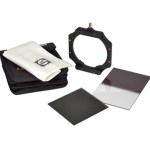
 Over the past year, I decided to include filters in my camera kit. I took them on several trips and even on local outings, determined to take the time to use them properly. I started out with the standard collection of screw-on filters – a polarizer, a variable neutral density filter and a graduated neutral density filter. I quickly discovered the pros and cons of these types of filters and expanded my kit to include a square-format drop-in filter system. This consisted of a lens adapter, filter holder and a variety of 100mm square filters.
It’s been an interesting experience that I thought was worth sharing. Here’s what I’ve learned.
 Recently, one of these subscription channels included a short discussion on how Instagram has influenced the way photographers approach their art. The premise was that Instagram has completely changed photography. Their argument: its technical requirements and this generation’s social norm of wanting instant gratification and continuous stimulation of the senses has resulted in a new standard for photography. What is that new standard?
  I’ve set myself a goal for the next year to become more proficient at Photoshop. I use a variety of editing tools now, most of which are slider-based. You move a slider and watch what happens on the screen. The sliders in most applications are laid out in a nice orderly fashion, and you can literally move from top to bottom and achieve a well-edited well-presented image.
 Add to that the challenge of learning something new as an older adult. We don’t absorb information the same way as we did as a child. We don’t necessarily retain it even when learned. Memory declines in uneven ways too – with muscle memory and the memory of physically doing things changing at rates different from the memory of reciting things or recollection. So I’m not only setting a goal but trying to find the best method to accomplish it.
  I’m becoming more puzzled and concerned about new products released by hardware and software companies that invariably get poor reviews and need to be “fixed”. We’ve seen that lately in the Apple 15 inch MacBook Pro (which has been “fixed” by the 16 inch released Nov 15/19). We’ve seen that in Skylum’s Luminar 3 (which as of this writing, has been “fixed” by Luminar 4, released Nov 19/19). We’ve also seen that very recently in Adobe’s Photoshop for iPad, which as of this writing, has not yet been “fixed”, after having been essentially trashed on its release in Oct. First-release mirrorless cameras from Canon and Nikon both needed firmware “updates” (i.e. fixes). And lastly, ON1’s Photo Raw 2020, released in October, seems to have a bug that causes it to do what should be background file management tasks in the middle of a photo edit, preventing any meaningful work from getting done. As of this writing, that has not been “fixed”.
 Modern digital cameras, particularly “prosumer” quality and above, include several different modes or ways of interacting with the camera settings. Although labelled differently for different manufacturers, all good cameras have modes that range from fully manual (where the photographer picks all of the settings) to fully automatic (where the camera evaluates the scene and picks the settings).
 Not quite what you expected? In the northern hemisphere, Fall is typically about shutting down, about returning to routines that don’t include time at a vacation home or sunlit walks in shorts and a floppy hat. We begin to cocoon, bringing in our lives indoors, at least more so when it gets dark 4 hours earlier.
 And the more software that includes blend modes, the more frustrated I get at their lack of ability to explain in plain English exactly what they are. I’ve read countless blogs, gone to workshops partly to understand them, watched countless YouTube videos looking to make sense of them, and more often than not, the recommendation of the instructor is simply to try them and see what happens. My brain needs more. I want to be able to explain them. This post will try to do that.
 Skylum announced the upcoming release of Luminar 4, scheduled for sometime in the fall. Originally released in 2017, the company and the product have gone through some interesting evolutions.

