
There is a raging controversy this week over the release of new software for creatives. The controversy: one man used AI to reverse engineer all of the programs in the Adobe Creative Suite and released the result to the world for FREE!

This is a controversy on so many levels that I will only touch the surface here. I also have my particular point of view which is frankly not supportive of any such effort. So if you believe that all is fair in love and war, you can stop reading here.
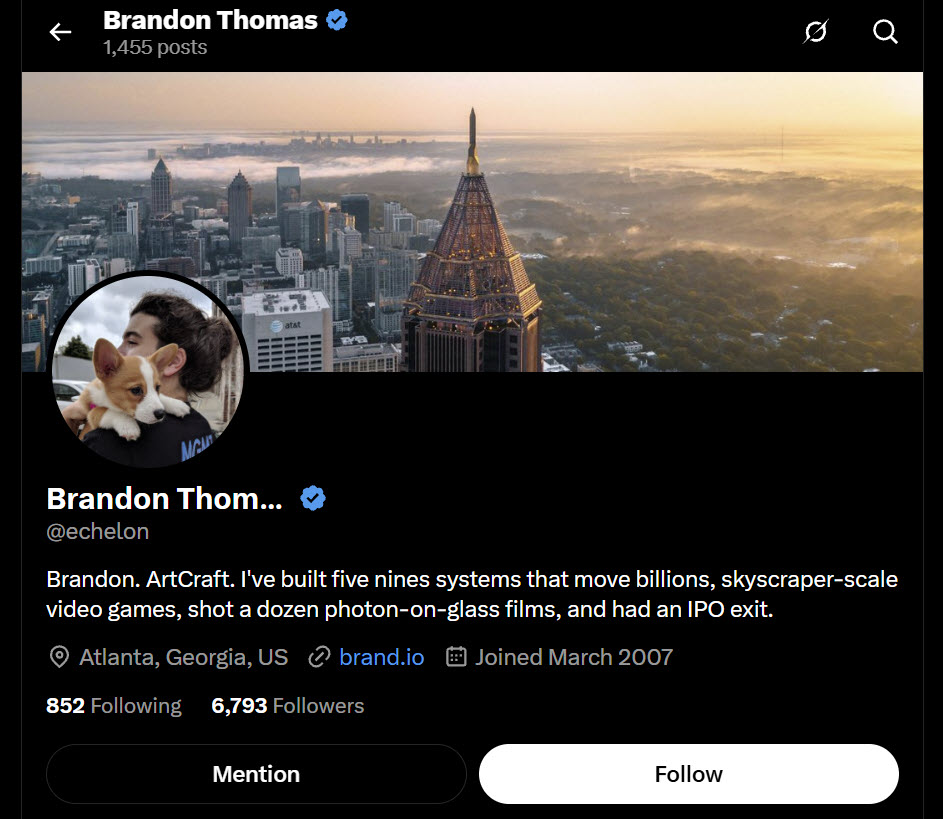
The software suite is called “ArtCraft” and the individual components parallel Adobe’s except the word “craft” has been added to the end. PhotoCraft, LightCraft, etc. “Developed” by some guy named Brandon Thomas, he decided to take this action after Adobe charged him one too many cancellation fees for their software.
Issue #1 – Is It Legal?
No doubt Adobe’s legal department is already drafting motions to pull the software, prevent anyone from using it and prevent anyone from doing this again. But this software was created by an AI engine, not a human, so who you gonna sue? For years, competitors have tried to duplicate the look and feel of Adobe products in order to provide a “seamless” transition for new users. They haven’t been sued, at least not that I know of. This is different.

Instead of just creating an interface that feels familiar, this attempt has gone into the bowels of the earth to replicate all the features and functions of the software. The intent is to produce exactly the same results when a slider is moved or a button pressed. That has not been the case previously. Others come close, but rarely close enough, at least in the copy cats I have tried. Every single time, I’ve come back to Adobe’s products.
I’m not clear on how intellectual property rights are governed in this new age of AI. No doubt Adobe itself has used AI to create some of its offerings and capabilities. So who actually owns those rights? But the reality is that Adobe has almost infinite resources to fight this one guy on his creation. Not sure I want to take a bet on who will win. And what happens to anyone who has downloaded and starts to use the clone is also not clear. I won’t be one of them.
And what about the AI clone engine itself? You can bet Anthropic (the creator of the AI engine Claude that did the cloning) will also be dragged into this legally as a responsible party. If Adobe’s suite can be cloned, so can every other software out there. There will be a mad call for even more restrictions on how, what, where, when and why these tools can be used.
Issue #2 – Is It Practical?
One guy, not sure if he is working in his parents’ basement, was able to bring this to the world. Adobe has been working on these products for more than 40 years, with hundreds if not thousands of engineers and contributors. They’ve built an infrastructure to support it with campuses of servers, offices and regional outlets. The Creative Cloud behind the scenes is as much an integral part of the workings of Adobe products as are the software packages themselves.

Mr. Thomas has said that his suite, not yet fully functional, will be so within a month. Come on. Really? Again, there is a difference between replicating the look and feel of a product, and replicating all its functionality and outcomes. Those who have reviewed the suite (I won’t be one of them) have commented that surprisingly, some things like masking seem to work really very well, whereas other things such as RAW profiles leave a lot to be desired. Since every “new” software package has growing pains, this is to be expected. Or is it? It is after all a “clone” of the Adobe suite. So why does it not work flawlessly?
I’m no software engineer, but I do know that the functionality of Adobe’s products does not reside solely on the desktop. The software reaches out to those massive server farms out there as needed to achieve those professional results. Also, the initial setup functions on my computer place Adobe directories all over my hard drive, so that removing the software completely requires special removal software from Adobe to get it all.
So he has cloned it, but not everything. Even if left alone legally, I have no confidence that this one guy with his AI cloning engine, with no access to the supporting infrastructure, will be able to fully replicate anything. And even if he does, who will maintain it, who will enhance it, who will support it as its popularity grows?
Issue #3 – Is It Needed?
One of the features of Adobe’s business model is that it continues to support legacy users by not removing familiar features and functions as new more efficient ways of doing things appear. Instead, they coax those legacy users over to new ways by demonstrating the time savings and simplicity of using the new ways. And eventually, maybe, they turn off the old way.
Adobe’s software also serves many different creative audiences. I’m only interested in the features and functions that support photography. There are many tabs/sections/apps I’ve never tried and never will.

Competitors to Adobe have recognized both of these business model choices and many have taken a different tact. I in fact cancelled my subscription to the Adobe “photography” plan because improvements to Lightroom meant I hardly used Photoshop. Instead, I have folded in Skylum’s Luminar into my workflow and now use that only for any creative improvements to my photography. It is focused solely and completely on photography, with amazing modern tools that create an artistic vision in just a few keystrokes. I still use Adobe’s Lightroom for image management and all initial processing, but hope to find a Luminar equivalent in this sphere as well. Not quite there yet though.
Some of those modern tool builders also offer free versions, the most compelling of which is Canva’s Affinity Suite. All of this has spung from the predatory pricing practices that emerged from Adobe in the past few years, raking in huge profits while constantly messing with the little guys and causing them in some cases enough pain to do what Thomas did. While Adobe fights the legal issues, I certainly hope that it will take note of the situation that drove this problem to emerge in the first place.
The bottom line is that regardless of “free”, I don’t need, don’t want and won’t use a full Adobe Suite clone. I’m currently very happy with Lightroom mated with Luminar and will continue the hunt for a file management replacement I can enjoy. If you’ve tried ArtCraft, let me know in the comments and how you liked it. I did put the link in the lead-in above, so feel free.
By the way, the same fellow has now revealed that he will do the same thing with the Microsoft Office Suite. That’s coming soon.

