
You probably have just come back from long summer days at the cottage, on a trip or just spent lounging away from all of your many commitments. Some part of you looks forward to coming back, re-establishing that routine and settling back into it. Part of my routine is usually paging my way through fall announcements of new computer and photography technology and software. Although I no longer routinely purchase the latest and greatest of anything, I still enjoy (or used to) seeing what the brilliant engineers have come up with. Not this season.
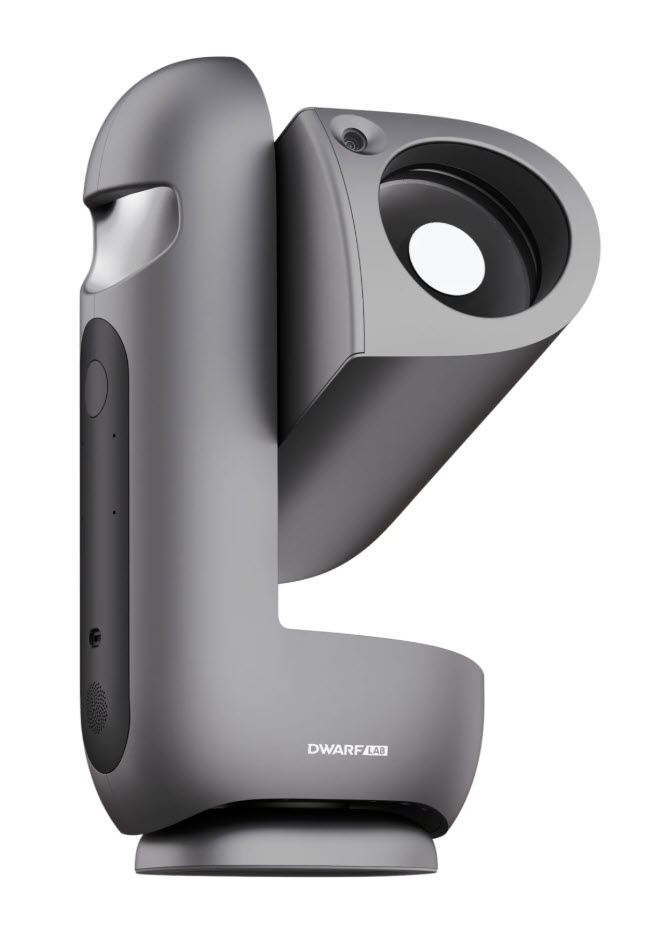
There are some new developments in my astronomy hobby with more and more releases of smart telescopes, and of course the new Apple products have been announced as they always are each September, but all other domains seem ridiculously quiet. Even the rumor sites are quiet. And even the annoucements we do have include staggered or delayed release schedules. I haven’t seen anything like it since the height of the Covid pandemic. So I set out to find out why.
You might choose to stop reading after this next bit and I understand if you do. One of the technology advances that has not had a hiatus is artificial intelligence, or AI. I thought I would ask Google Gemini to help me explore this issue of the new season that isn’t. Its answers are below. These comments are AI generated.
I first asked why it feels like there are fewer technology releases recently than in past years? Usually by now, I have 1/2 dozen or so “stay tuned” notices in my email priming the pump for something coming soon. Gemini’s response:
| Fewer new consumer technology releases like computers and cameras are happening because component manufacturing capacity has shifted toward AI data centers, causing a global memory chip shortage that forces brands to delay releases or scale back production. The AI Infrastructure and Memory Shortage Component Reallocation: Major semiconductor and RAM manufacturers (such as Samsung, SK Hynix, and Micron) have redirected a massive portion of their silicon wafer and RAM production lines away from consumer products and toward high-margin AI servers and data centers. Soaring Costs: A single stick of RAM and flash storage has become drastically more expensive to source. Manufacturers cannot secure affordable components at scale, leading to a production slowdown for mid-range and budget laptops, compact electronics, and gaming devices. Electronic Shrinkflation: Instead of launching innovative new hardware, many companies are either raising prices significantly or quietly downgrading internal specifications in existing device lineups under older model names. Product Maturity and Slower Innovation Core Problems Solved: Standard consumer electronics categories like personal computers and digital cameras have reached a high level of maturity. Modern devices from two or three years ago already handle everyday computational and creative tasks effortlessly, meaning yearly hardware shifts offer only marginal, incremental gains. Longer Replacement Cycles: Because year-over-year upgrades feel less impactful and prices for new tech have climbed, consumers are holding onto their computers and cameras much longer, which reduces the market incentive for brands to rush out fresh iterations. |
Interesting. Three key themes: ironically, the focus on AI development and data centres, the availability of chips and maybe even a plateau in the sophistication of those chips, along with maybe fewer outstanding needs to be addressed from consumers, are all impacting the pace of technology releases. And of course price.

Despite these constraints, every company has to keep innovating. So I then asked why things seem so quiet – little to no information on either real new products or even plans for products. Gemini’s response:
| It definitely feels unusually quiet this autumn, but “tech season” is actually kicking off right now—it just looks completely different and more “top-heavy” than in previous years. If you feel like you have heard nothing, it is because tech companies are radically shifting their release strategies, delaying mainstream models, and focusing heavily on expensive, niche hardware. The quietness is a direct result of several major shifts happening behind the scenes: Mainstream “Base” Models Are Being Delayed Instead of dropping an entire family of products all at once, companies are holding back standard, entry-level versions to ease supply chain strain. Delayed Base Models: For instance, Apple is widely reported to be holding back its standard base iPhone 18 until early 2027, focusing exclusively on pushing its ultra-premium Pro and foldable lines. Staggered Computer Launches: Rather than waiting for a massive autumn event, computer hardware has been pushed out in quiet, unusual batches—like Apple quietly launching new M6 and M5 Mac chips over the summer rather than holding them for a traditional October keynote. The Shift to “Invisible” Software Upgrades Much of the industry’s current focus has shifted from physical hardware designs to software infrastructure. Companies are spending their budgets on embedding Siri AI upgrades, Google Gemini integrations, and agentic AI features into existing ecosystems. Because you cannot physically see a software algorithm or a backend cloud upgrade, the traditional hype around new hardware aesthetics feels nonexistent. Hyper-Premium and Niche Focus When companies are announcing things right now, they are targeting the ultra-wealthy or niche professional markets rather than everyday consumers. The big announcements dominating the industry right now are luxury-tier items—like the upcoming foldable iPhone Ultra expected to cost upwards of $2,000—and specialized enterprise computing power rather than standard, affordable laptops or everyday digital cameras. |
Wow. That’s unexpected. The focus on software upgrades instead maybe makes sense in light of the chip issue. But abandoning the average consumer in favour of the hyper-premium one is not what I would have concluded. Since my main interest is cameras and photography, I asked for a summary of camera releases in 2026 and what was planned for 2027. Gemini’s response:
| While the overall pacing of the industry has felt slow, 2026 has introduced highly specialized hybrid and ultra-premium bodies, breaking a brief release drought early in the year. Manufacturers are packing these releases with stacked sensors and high-end video integration, pushing mainstream or consumer-grade updates into late 2026 and 2027. The focus this year has been overwhelmingly on high-end resolution, cinema/hybrid capabilities, and compact premium systems. Sony 66.8MP Resolution Giant (A7R V Successor Variant) Canon EOS R6V Panasonic Lumix L10 Insta360X6 The pipeline for next year is shifting toward sports flagships and high-resolution APS-C models that were delayed out of this year’s schedule. Canon EOS R7 Mk II Nikon Z9 Mk II Fujifilm X-T6 Sony FX3 Mk II Leica M12 |
The items on next year’s schedule have been there for a long time. The items actually released this year were not at all expected except maybe for Sony. Now I know why my own propensities for new camera gear have changed – there isn’t anything revolutionary in any of this. It’s all more of the same. Maybe Gemini is right – things have plateaued and where they haven’t, the pricing is more than I am interested in.

I did watch the latest Apple event on September 9th for only one reason: the notion that the next generation of iPhones will have variable aperture cameras. Gemini was right – they released only their premium models. Base models and other accessories will come next year.

I do have a perpetual interest in going smaller and lighter with my camera gear, and based on recent experience, I use my iPhone as much now as I do my regular camera. And I was impressed. I have decided to purchase a new iPhone, the first one in 4 generations, and likely my last. The cost was ridiculous. Surprisingly, my 4 generation-old iPhone still has a remarkably good value and I was able to use it for trade-in purposes. I think that says a lot about the state of things.
There may be a few new announcements even this week – rumor has it that Canon will release the R8 Mark II today. Surprisingly, Gemini missed that in its list of products coming. Rumors also say that it will truly be a minor incremental improvement only. I guess that’s why Gemini left it off the list.
The camera business has long been in decline. If I’m any example, I will be spending more time with my iPhone for the next while exploring its new features than I might be with my Canon camera. I will always love the feel of a full sized camera in my hands – at least I will until the point where my ever encroaching arthritis makes that impossible. But the iPhone will likely have a much greater role in my photography in the next few years to come.


I hope a new iPhone will be a good purchase for you. I love mine. Jack and I have been using our phones more and more. We have had software that allows us to set the aperture, speed and ISO manually for years, although I must admit, it does a good job without me telling it what to do. Good luck!
LikeLike