
For the past year, I’ve been using the Canon EOS R5 as my primary stills camera. It is a superb piece of equipment, carefully engineered to fulfill all of my wildest dreams for stills photography. I purchased it for what will become a recurring theme for me – how to make photography more convenient.

As I get older, there are aspects of photography such as the tracking of moving subjects, the determination of tack sharp focus, remembering to switch from high ISO back to normal ISO, remembering to switch from single shot to continuous shooting and back, that could use a little help. The Canon EOS R5 provides that to me exceptionally well.
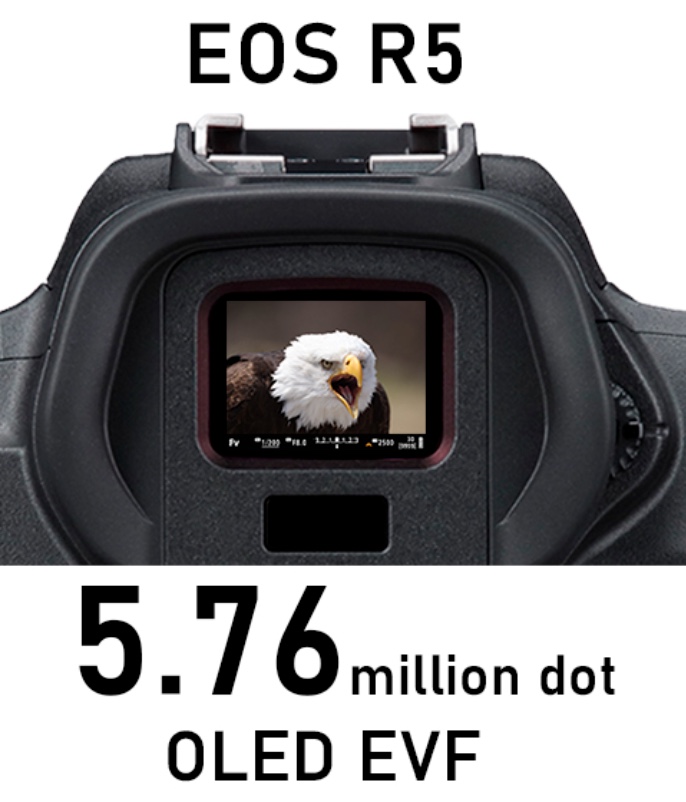
Its large, high resolution viewfinder allows me to arrange all of the important shooting information around the edge of the frame without affecting the ability to see the subject clearly. That’s what defines a mirrorless camera frankly and separates it from a DSLR. That clear view of the subject and the settings allows me to set up the shot easily even with my diminishing vision, and when I can’t, there are built-in warnings and colour overlays to help me.
Likewise, the LCD is big, bright, rotatable to any angle that saves my aging back and knees, and yet lets me get the camera into the right angle to capture any scene, no matter how high or how low.

I can customize essentially every button and dial to perform the function that works for me, I can set up and save custom shooting settings that give me everything from landscape setups to close up to action setups at the flick of a button. And I can save out all my customizations to a file to store remotely, in case something causes the camera to need a reset.
Sounds like a gem, doesn’t it. It’s fast, light, smart and takes pretty pictures too. It even shoots video.
Say what? Shoots video. But the title of this blog is that it is not a video camera. Read on, intrepid friend.
Continue reading “The Canon EOS R5 is NOT a Video Camera!”
 I’ve decided in 2021 to step out of my comfort zone and try new things. Why? The residue of 2020 and its horrible effect on my well-being, plus the fact that in 2021, I will officially become a senior citizen. Both have been and are scary. But in some way, both have inspired me to fight back. Getting older reveals obvious changes in body and mind, and I want to control both of those if I can. My biggest fear, revealed
  Not quite what you expected? In the northern hemisphere, Fall is typically about shutting down, about returning to routines that don’t include time at a vacation home or sunlit walks in shorts and a floppy hat. We begin to cocoon, bringing in our lives indoors, at least more so when it gets dark 4 hours earlier.
 My colleague then said: “I’m bringing this flash back. It doesn’t fire consistently.” He demonstrated the problem, with the unit set first on TTL mode and then on manual mode while attached to the hotshoe on his mirrorless camera. He was right. Without changing camera settings, sometimes the speedlite would fire and sometimes it wouldn’t. He returned the unit. But it got me to thinking about how the speedlite and camera work together and how to make sure they always work when needed.
  Travelling on assignment or for personal interest is typically a big part of most photographer’s lives. The challenge of managing gear – taking enough, but not too much – is always top of mind. But what about managing your images while you are on the road?
 Although I use cloud storage as my primary storage option, most of these services “sync” at least some of that content to a local hard drive. Until today, that hard drive was my computer hard drive. But I’ve now run out of room on the local drive, and had to make a choice about where to put the local copies. Here’s what I came up with.
  Unfortunately, there was a series of missteps with the upgrade and it was initially retracted, then re-released, which is a surprise for a company that prides itself on its quality options for photographers.
 oldgirlphotography.ca