

Happy New Year all! Hope the holiday season was everything you wanted and that you received and gave everything that made your season perfect. I was actually quite ill over the holidays, struck with a seasonal flu (and maybe other bad bugs) that kept me at home for quite some time. Eventually, this becomes boring, so I turned my diminished brainpower to exploring a topic I had not explored lately: how best to balance budget and hobbies in retirement?

I actually have had a budget every year since retirement. And at the end of every year, I check it to see just how much difference it has not made to my end of year finances. I’ve decided to give it a more meaningful try for this coming year, especially since travel will be big on the agenda this year.
Budgeting has long been the mantra of financial planners who work with young investors, particularly the part about saving for retirement. But few seem to have good advice on how to manage that money after retirement. Why of course the floodgates open, no? This post is not financial advice. This post is about a few things I’ve learned about having fun responsibly in your golden years.
You’ll soon see below that I should be the last one to comment on this, unfortunately. All I can say is “do as I say, not as I do.”

Here’s the first thing I’ve learned. When you find a new time-filling passion that grabs your full attention, do NOT immediately think you need to get all the trappings of that activity at once. I’ve fallen into that dilemma time and time again. Most of the hobbies I’ve indulged in since retiring are very tactile, with lots of equipment and supplies to help you. In stark contrast to my paper driven office jobs I guess. These hobbies have included photography, astronomy, gardening and music (piano).
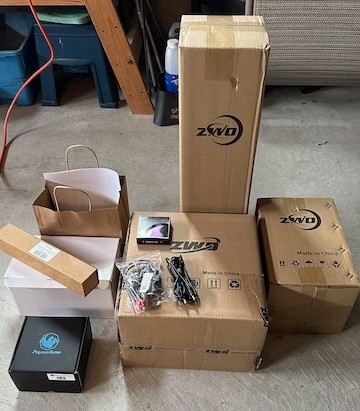
Having discovered an interest, I was led down the garden path (pardon the pun) time and time again on how best to enjoy it. The worst example of this was a trip to my local astronomy store in 2022, supposedly to discuss how to ease into the hobby, and leaving with over $5K of equipment that filled the trunk of my car. I’ve done similar things with photography and music. Only to discover that much of the gathered items sat untouched for months or, yes, were never used.
So instead, I encourage you to select one main component of your new hobby interest, and focus on getting that item first, learning everything you can about it, then selectively adding any accessories. I would also encourage you to define a goal for your new hobby – deciding how far and how fast you would like to take it. In a bit of a Catch-22, that may not be possible until you know more about the hobby, which might involve some purchases only to help you decide what is the wrong direction for you. To help avoid this catch, maybe connect with a friend who has the same “stuff” and try it out if you can, or even consider going to the used market first. There are cautions with both of those, but you might have a more clear picture on your direction as a result.

In this age of social media, we often compare our activities to those online, particularly to those we discover and admire. We want to do what they do – it’s human nature. But perhaps the biggest lesson I’ve learned about balance is that this effort to match someone else is NOT relevant to your enjoyment of the hobby. In fact, it can be crippling. I have made some conscious decisions about the quality of the work I am seeking to produce for my photography and astronomy activities. And increasing physical constraints and limitations, along with decisions about how much intellectual effort I want to expend, are sometimes making the “stop here” decision easy for me – example: arthritic hands playing the piano. I am ecstatically happy being a modestly accomplished hobbyist.
Next, I would strongly recommend connecting with other hobbyists through clubs or face-to-face social groups (not social media) to be able to get advice on practical enjoyment and progression through your hobby. Having someone to talk to who has been there before is invaluable. But there are some cautions here too.
One caution is that there are many ways to achieve a goal. In the tactile and equipment dependent hobbies of mine, I run into every manner of advice. Some people prefer comfort and convenience, and will pay extra for that option. That means they buy name brands, with extra features and functions, and layer accessories over that to make things even easier. Some are the total opposite, preferring to find the cheapest, untested, disparate items that they can physically take apart and tinker with to get things to work smoothly on their terms. It’s not a cost thing – it’s how they prefer to enjoy the hobby. Some even go so far as to make their own accessories though technologies like 3-D printing.

As I listen to advice and consider a purchase, I now ask myself, what problem will this solve? I do land more on the side of comfort and convenience, but do also now look positively on anything that compensates for age-related decline. I bought my Canon camera because of its ability to instantly focus and track, but also because its size and weight were manageable. I bought my telescopes, telescope mounts and other accessories because they all work together seamlessly and were the strongest and lightest pieces of equipment I could find. I do buy brand names because they tend to be better built, tested and the software better written for good performance. I bought my electronic piano not only for its sound profile and realistic key feel, but also so that it would fit into a corner on my stair landing, providing a cozy nook for practice. I have tried a few cheap “bargain” versions of some products, only to be consistently disappointed at the performance or the effort needed to get them to work.
My next area of advice is around resisting the need to upgrade. Not only do new items emerge each year to peak your curiosity and drain your wallet, but online voices continue to “prove” how much better your enjoyment will be if you upgrade. We all like shiny new things, but as in the section above, the next purchase has to solve a problem or really better enable you to take that next step in your enjoyment of the hobby. Don’t get me wrong – there is a progression from beginner to enthusiast where some upgrades make total sense – I have replaced several items over 3-5 years to find better performance and results. But you do reach that balance point I mentioned above – the modest hobbyist where your results make you fully happy. Frankly, I’m now at a point where I look at the next big thing and typically feel it would NOT add to my enjoyment. My most recent purchase was an item to help further reduce the weight and size of one of my telescope setups by consolidating several separate devices into one. Easier to move and transport on trips.
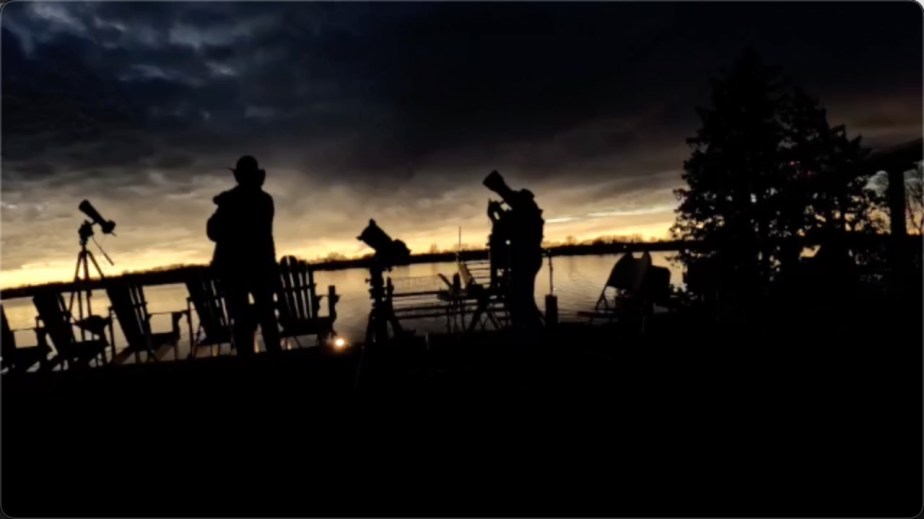
And speaking of trips, my last area of advice is on the trade-off between new physical purchases and instead investing in experiences. This has been a bit of a hard lesson for me. I thought my hobbies would make me fully happy on their own. But I’ve discovered that sharing moments with others, including travel to broaden the reach of my photography and astronomy, and being part of organized groups and events dedicated to the hobby have made each of them so much more fulfilling. So if you are budgeting for a new or favourite hobby, make sure the experience is a key part of the plan.
May this year be your best year ever, and may your hobbies help to bring you all the joy you can imagine.

