Update – Aug 2020: I’m happy to note that Fuji has significantly improved their focus stacking option by providing “automatic” focus stacking in their most recent cameras. You select a starting point, ending point using manual focus, hit start and the camera will collect the right number of images for your lens and focal length. Really cool.
____________
Happy New Year. Hope your holiday season was fabulous.
This post is specific to Fuji users, so everyone else can have a break. We’ll see you in a couple weeks.
In mid-2018, Fuji provided an upgrade to the firmware of it’s X-series of cameras. Known for adding new features and functions, Fuji users were delighted to see the addition of new menu options and one particular update: the addition of in-camera focus “bracketing”.
 Unfortunately, there was a series of missteps with the upgrade and it was initially retracted, then re-released, which is a surprise for a company that prides itself on its quality options for photographers.
Even though it was corrected, Fuji made another mistake in not providing useful information to help us get the most of the upgrade. This post is specifically about focus bracketing. Continue reading “Fuji’s Focus Bracketing Explained” →

 Travelling on assignment or for personal interest is typically a big part of most photographer’s lives. The challenge of managing gear – taking enough, but not too much – is always top of mind. But what about managing your images while you are on the road?
 I gave my first full length feature talk on photography this month, to a sister camera club. Its members were knowledgeable, animated and fully open to the challenge of challenging me to entertain them. It isn’t easy spending 90 minutes in front of an audience, especially when any of them could have as readily been the speaker for hire.
 Although I use cloud storage as my primary storage option, most of these services “sync” at least some of that content to a local hard drive. Until today, that hard drive was my computer hard drive. But I’ve now run out of room on the local drive, and had to make a choice about where to put the local copies. Here’s what I came up with.
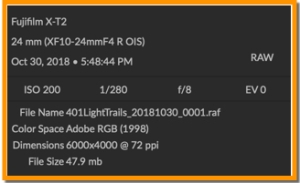 What does that have to do with photography? As it turns out, every part of a digital image is a set of values – for size, dimensions, camera settings, colour space, etc. We’ve long had the ability to manipulate any one value to our liking through the sliders we see in modern editing software. Now it seems we also have the ability to redefine broad swaths of data at once. Find out how.
 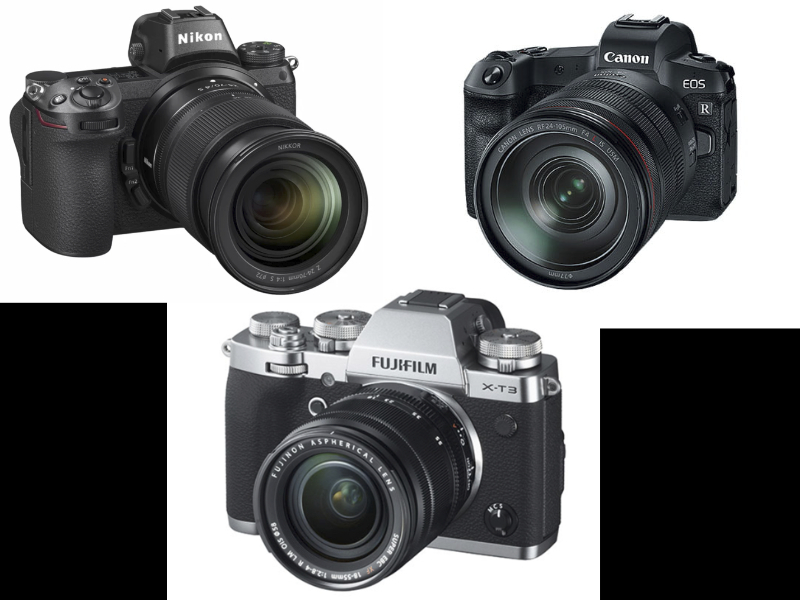 In the past, this would have caused me to breathe more rapidly, excitement building, as I surveyed the options ahead. Not this time. Not for any of them. And I’ve been trying to figure out why.
