
My two favourite genres of photography are landscape photography and architectural photography (the urban landscape?). Both of these appeal to me because of the awe factor. You turn a corner or climb a hill (a very small hill in my case) and an incredible vista lays itself open in front of you. You immediately feel small and insignificant, yet somehow you are cradled in the glory that is the Earth. Yes, even concrete skyscrapers can have that effect on me.
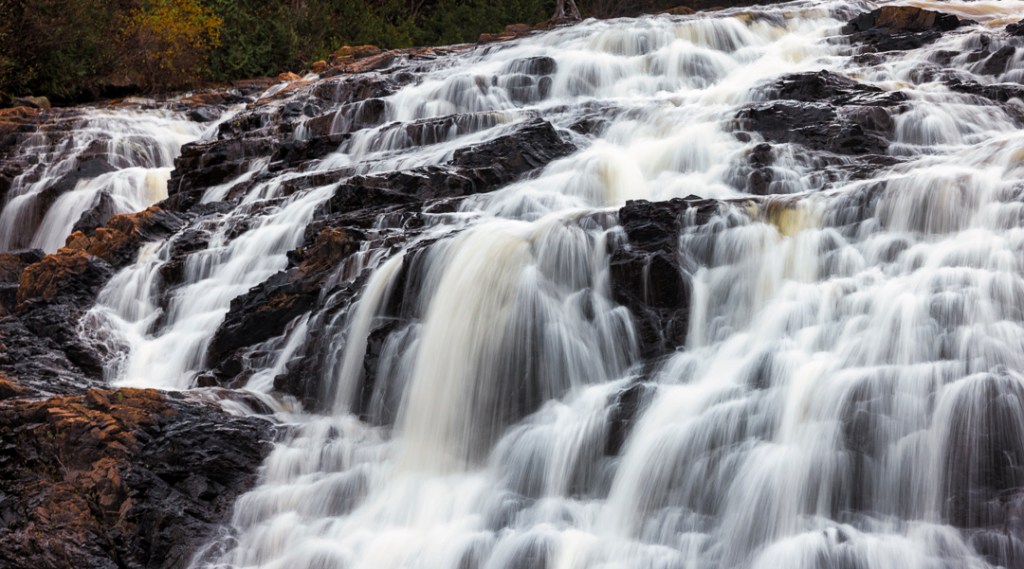
I naturally gravitate to following photographers who enjoy the same thing. Well at least in theory they enjoy the same thing. They do seek out those moments around the corner and capture breathtakingly wide vistas as well as more intimate smaller scenes, even macro scenes. But there seems to be a huge difference in the impact different images have on me, mostly because of one thing. Some photographers deem it essential to accurately photograph and present only exactly what they saw on any given day. They do seek the awe factor, but include it only if it was naturally present in front of them that day. Others seem to take more liberties with “reality” and add in their artistic vision/touches as a supplement to what the camera captured.
This post is about the wide variation in capture and processing choices I see among those who label themselves as landscape photographers. The range is much wider than I thought it would be.
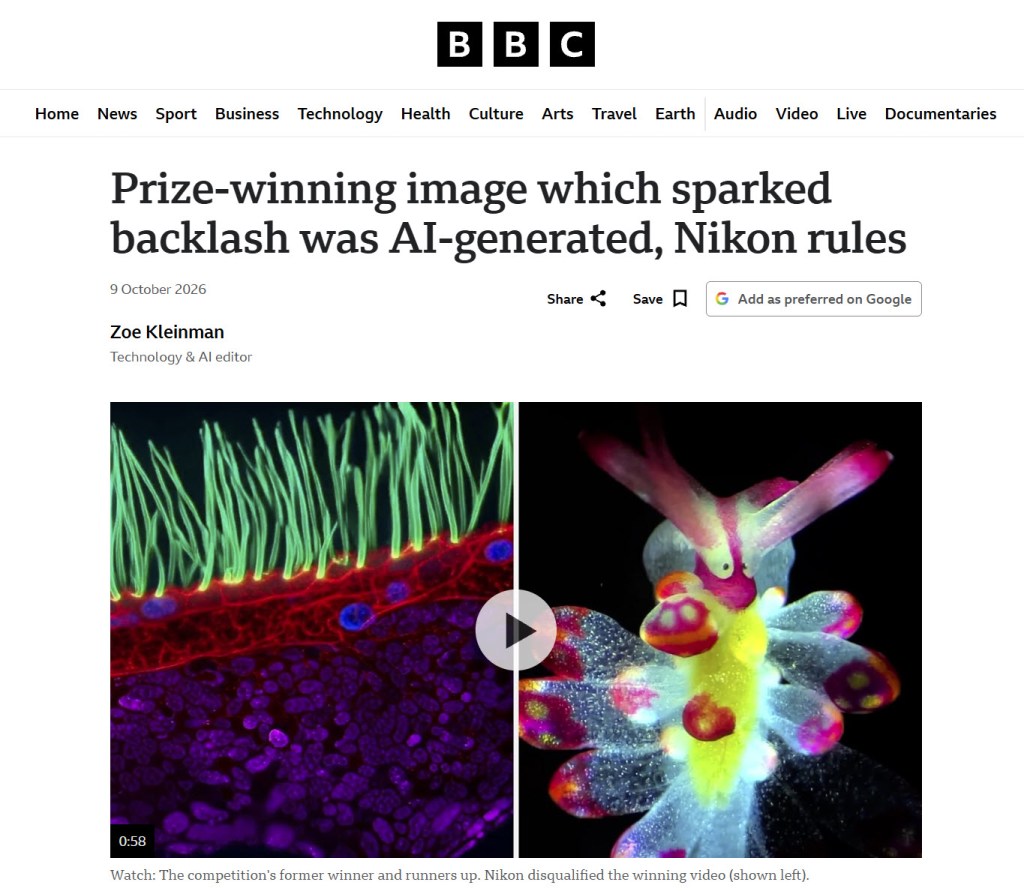
Let’s get something out of the way first. This post is not about controversies in photography competitions. Competitions can and do set standards for what is acceptable in their competition. Some limit sizes or dimensions, some limit choices on adjustments that can be applied in post processing, some banish the idea of removing any element of distraction from a scene, some insist that the image has to accurately represent what you saw that day, some even state that no element of the scene itself can be altered or disturbed (bending a branch out of the way, removing blades of grass or pebbles or trash, etc.). This post is not that.
This post is about the capture choices and finishing choices I see on YouTube and the impact those choices have on me. YouTube is a great place to understand the foundation of an image, as the makers document their journey to the location, along with choices made on location and in post-processing.
Two of the photographers I follow have quite different approaches to their images. Both have large followings and both do great work. But I’m much more drawn to one over the other. The two are Nigel Danson of the UK and Mads Peter Iversen of Denmark.
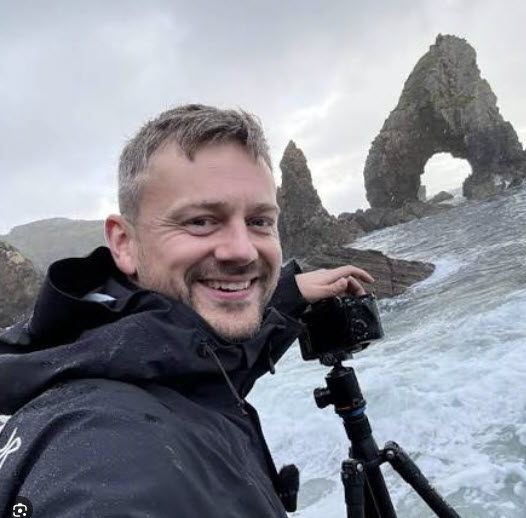
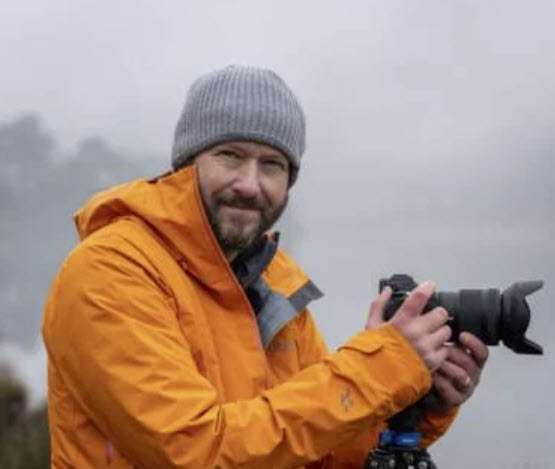
Both adhere to the foundational principles of landscape photography: you go to the location, you thoroughly explore it, you capture images from many vantage points, perspectives and levels using different focal lengths for different fields of view. You sometimes wait for specific weather to descend, or arrive when you know that specific weather phenomenon such as fog, sunrise or sunset will be present. You use camera settings to achieve a desired effect – short exposures in the breeze for still vegetation, longer for flat water, gentle river flow, focus stacking for tack sharp front to back, etc. Mads also has the added element of using timelapses to grab images of himself gazing out over the landscape from a picturesque point in the scene. Both photographers now include drone images too.
Both also carefully edit their photographs to achieve the look and feel they wish to present to the world. Both are equally diligent in that editing process, almost tweaking individual pixels to convey the right colour, tone and presence. Both have published courses showing these techniques and, more importantly, have shown us how to evaluate our own images to decide on a desired presentation.
But that’s where the similarities seem to end.
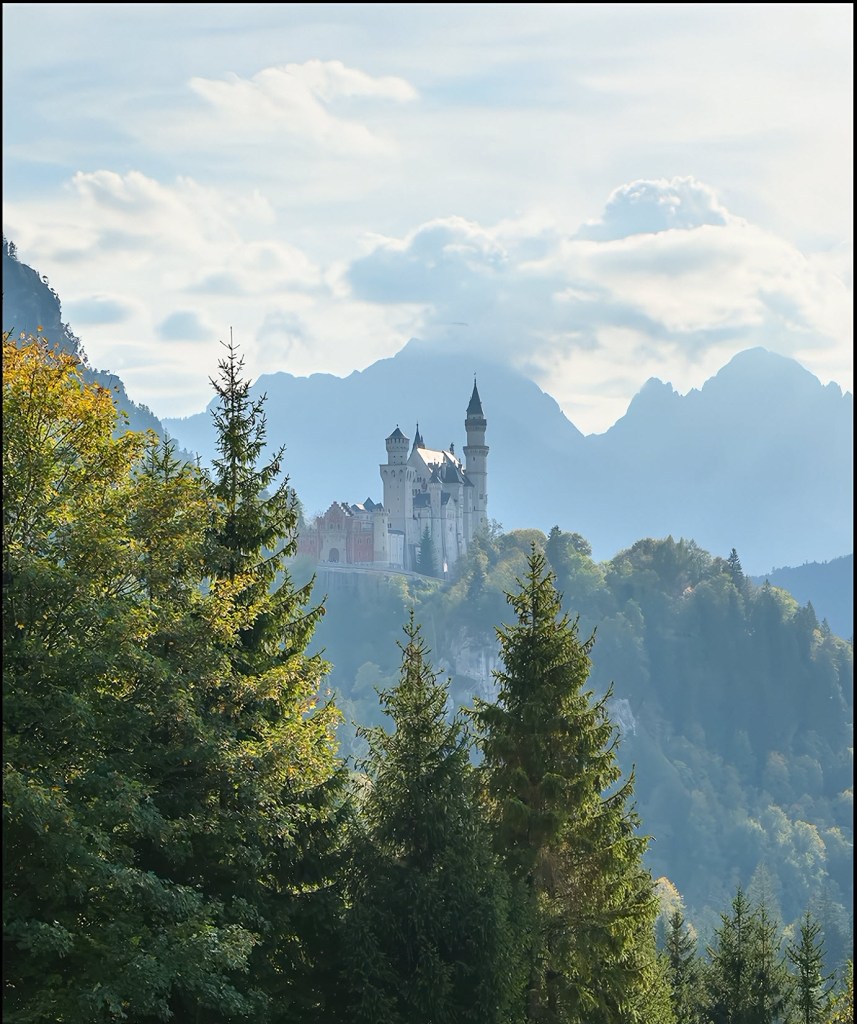
In a recent video showcasing a trip to Europe, Nigel stopped in front of a beautiful castle in Germany and described his thought process in capturing it. “From the point of view of the turret of the castle, it’s just enclosed within the frame of the mountain in the background. But we got these [cable car] lines here…and they are just interfering. Although you could probably get rid of those afterwards in AI, I prefer not to do that if I can help it. If I just go higher up there [pointing], I can just get a better angle.” And that in a nutshell tends to define his photography. He displays what the camera sees, tweaked with adjustments for tone and colour, compensating for limitations in resolution or dynamic range of his camera. His images are technically perfect and compositionally appealing, but in my humble opinion, they lean toward documentary shots, not art. Not always, but mostly. Sometimes the scene itself is a work of art so that takes care of it. But regardless, I don’t get a sense of his having introduced an “interpretation” of the scene. There is instead a lovely, appealing record of the scene.
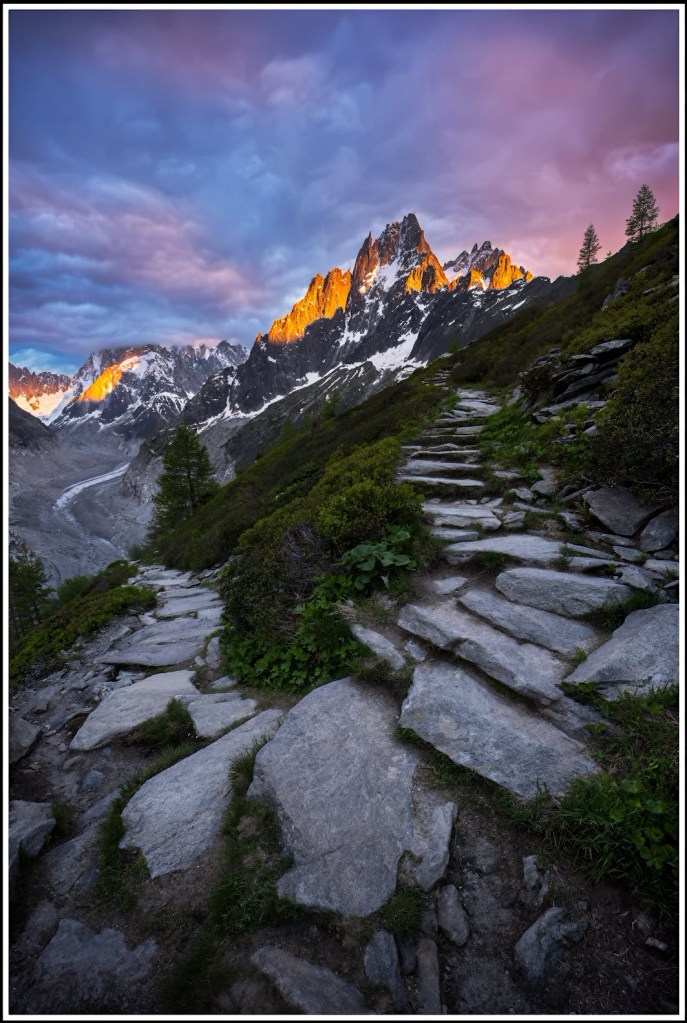
Mads routinely describes the objectives he has for any given outing and the results he expects to achieve. In a recent series of videos about a trip into the French and Italian Alps, he would often describe different creative choices for shooting the same scene, such as “It is possible to get the main shot [of the Mer de Glace glacier, Aiguille du Dru mountain and the famous bendy trail] with a 16mm if you go a little bit back and then you have the two staircases, but it is really, really nice to be able to punch in or zoom out to 12mm because you get so much more distortion. Of course at 16mm, you get compression, however at 12mm you get distortion, so it’s a little bit of a decision of what you prefer.” His photography appeals to me because of his ability to blend reality with art, to find something unusual or even to blend multiple images from the same location to showcase how he felt while there.
Unlike photojournalism or wildlife documentary work—where removing a branch or using AI alters the factual truth and is strictly banned—landscape photography operates on a spectrum ranging from strict realism to pure digital fine art. You would think it would take its cue from landscape painters of past eras, where “intepretation” was both encouraged and expected. But oddly not necessarily so.
There do seem to be three distinct camps in landscape photography around the level of “alteration” that is acceptable in an image, outside of competitions. These rules are not strictly enforced except in competitions, but rather are the result of what viewers and customers gravitate to personally. Each creator has their own audience. We find what appeals to us. The three camps are described below.
The Three Main Camps of Alteration
| Philosophy | Allowed Techniques | Strict Red Lines |
|---|---|---|
| 1. The Purists (Documentary / Realism) | Basic exposure, white balance, contrast, global dodging and burning, and removing sensor dust. Multiple exposures are only allowed for dynamic range (HDR) or focus stacking. | No cloning out objects (rocks, branches). No sky replacements. No generative AI fill. |
| 2. The Classic Artists (Modern Digital Landscape) | Everything the Purists do, plus cloning out minor distracting elements (like a stray branch or trash), extensive local dodging/burning to create mood, and focal-length blending. May also use perspective warping to change the relationship between objects in the scene. | Fabricating non-existent light sources, although with new “relighting” tools, they may reposition an existing light source to enhance contrast/depth, changing a gray sky into a sunset via AI, or adding non-existent elements (like adding birds). |
| 3. The Digital Compositors (Fine Art / Creative) | Anything goes. Sky replacements, dramatic AI-driven relighting, shifting colors for mood, stretching mountains for scale, and heavy compositing. | There are no technical boundaries; the only unwritten rule is transparency—don’t pass it off as an unedited, single-frame capture. |
Over the years, I’ve found myself moving away from the first category and much more into the second. I now seek out the artistic interpretation, wanting to look into the mind of the maker and feel what they felt as they were standing there. It’s no longer enough to simply see the features of the location in an image. I want my jaw to drop in admiration of the artistry of the maker.
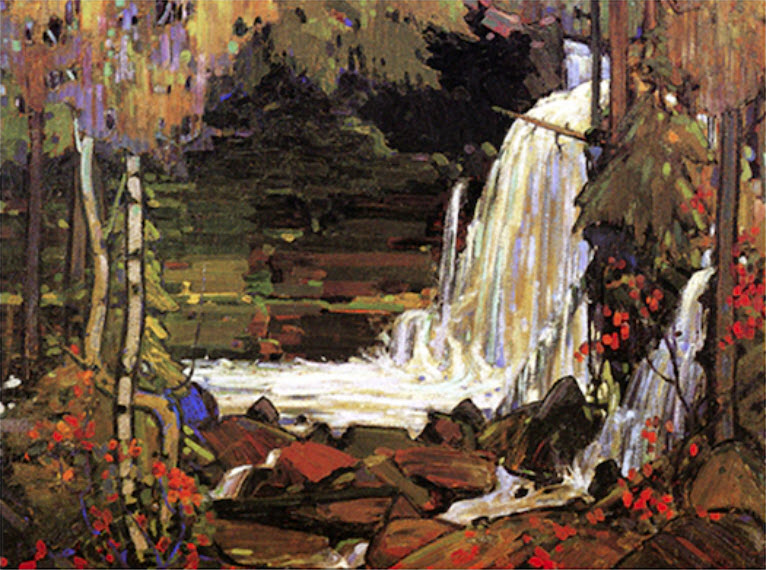
Perhaps my limited exploration of landscape painter artists has shaped this latest perspective. No one looks at a Turner, a Monet, a Georgia O’Keeffe or a Group of Seven painting and demands a GPS coordinate or a RAW file to verify if the clouds were actually that shade of violet. We accept it immediately as an expression of the artist’s internal perceptions, emotions and experiences. And we lovingly admire it.
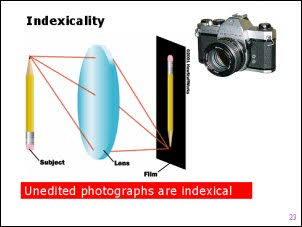
So why is photography so different? The reason photography gets trapped in this debate—while painting escapes it—comes down to a psychological concept called the indexical nature of the photograph. A paintbrush starts on a blank canvas. Every stroke is an explicit choice to add something. A camera starts with a full canvas. It records light hitting a sensor through a physical lens at a exact micro-second in history. Because of this mechanical origin, our brains instinctively expect a photograph to be a record of truth first, and art second. You expect to be able to stand in that same place and see exactly the same thing with your own eyes.
As technology evolves, the photography community is slowly being forced to adjust. With AI tools built into almost every smartphone, the line between “capturing” and “creating” has permanently dissolved. Some modern landscape photographers are actively rejecting the title of “documentarian” and proudly calling themselves digital artists or visual poets. They argue that:
- The RAW file is a lie anyway. A camera’s sensor processes light using a specific mathematical algorithm (like a Bayer filter) determined by engineers in Japan. It is already an interpretation, not absolute reality. Our cameras can’t actually see reality. You could argue that our eyes can’t see reality either but that’s a different blog.
- The camera captures a moment; the artist captures a feeling. If a long exposure turns rough waves into a silky mist, that isn’t “real” either—our eyes don’t see time averaged out over 30 seconds. The artist wants to convey a sense of motion, perhaps of calm. But that isn’t what we see with our eyes. Yet, purists accept it because it happens in-camera.

Because I’m at the point now where I align more with Mads’ vision than with Nigel’s, I’ve decided to dive head first into Mads’ world and study his techniques through his videos, his online courses and I’ve even just booked a future workshop tour with him in Europe next year. I’m looking forward to experiencing that new level, understanding what he sees when he looks upon a scene, but most especially being able to convey it to others via my images with as much emotion as he does. It should be amazing. Stay tuned for more to come.
In all fairness, it’s not a matter of loving one artist’s approach and hating all the others. I follow many different landscape photographers, including Adam Gibbs, Gavin Hardcastle, Thomas Heaton, Ian Worth, Courtney Victoria. All produce compelling work, but so far, only Mads and Courtney have landed squarely in that sweet spot of Category 2 Classic Artists. I react emotionally to their images much more than the others.
That said, I don’t ever see myself aligning with the third category, Digital Compositors, despite the occasional offering I do like. I need some element of “maybe I can see this someday too” to be able to truly admire a landscape image.
Some elements of this article (just a few like the table above and the reference to “indexical”) were created with the assistance of Google’s Gemini AI engine. It’s proving a nice way to bounce ideas around for these blogs. At no point will he/she/it ever write the blog for me.


Evolution of the photo/artist. So cool.
LikeLike