
Two alumni of the various television series called “Star Trek” passed away this week: Walter Koenig, who played Ensign Pavel Chekov in the original series of the 1960’s and Patrick Stewart, who played Captain Jean Luc Picard of the Next Generation spinoff of the late 1980’s.
These are not the first veterans of this franchise to pass. Several notable individuals have moved on.
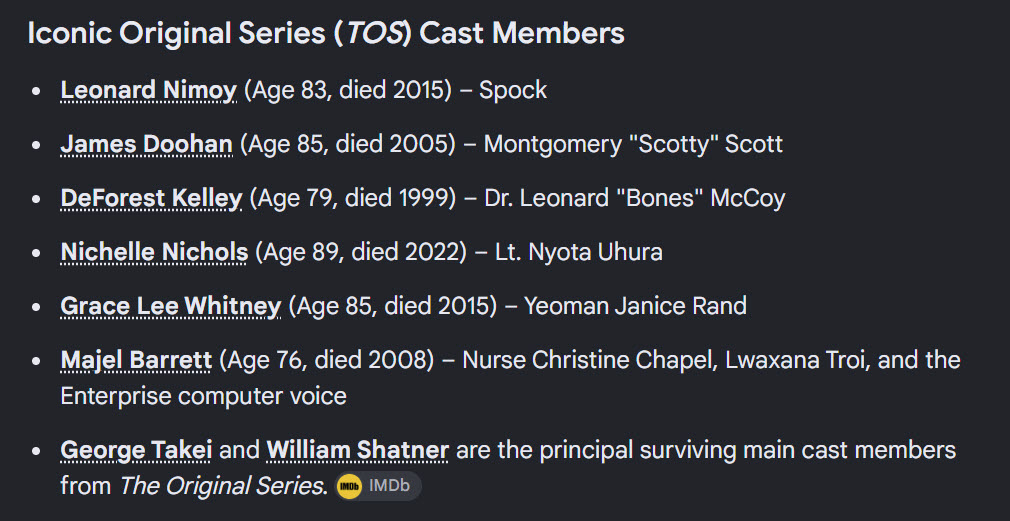
But somehow it’s different this time. The world is so much more turbulent and unpredictable, evolving socially and technically so much more quickly and in unexpected directions. I personally owe my outlook on life to shows like Star Trek who were not only brave enough to brake some cultural barriers, but were bold enough to show how stupid some of those cultural norms were. In this moment of remembrance, I thought it might be useful to ponder that a bit. Read on to see what I mean.
First and foremost of course was the stark statement that you did not have to be white and male in order to have a meaningful career, be as smart as your colleagues, and contribute as much to the success of “the mission”. These shows were really my first meaningful exposure to equal rights and equal treatment. Most especially a message that being heard is not annoying, not a privilege, but a right. It was a hard slog back then to fulfill it, but Star Trek gave me a glimpse into what things could be. It wasn’t perfect – they had to walk a line between today and tomorrow – but it sure was better than the present at the time.
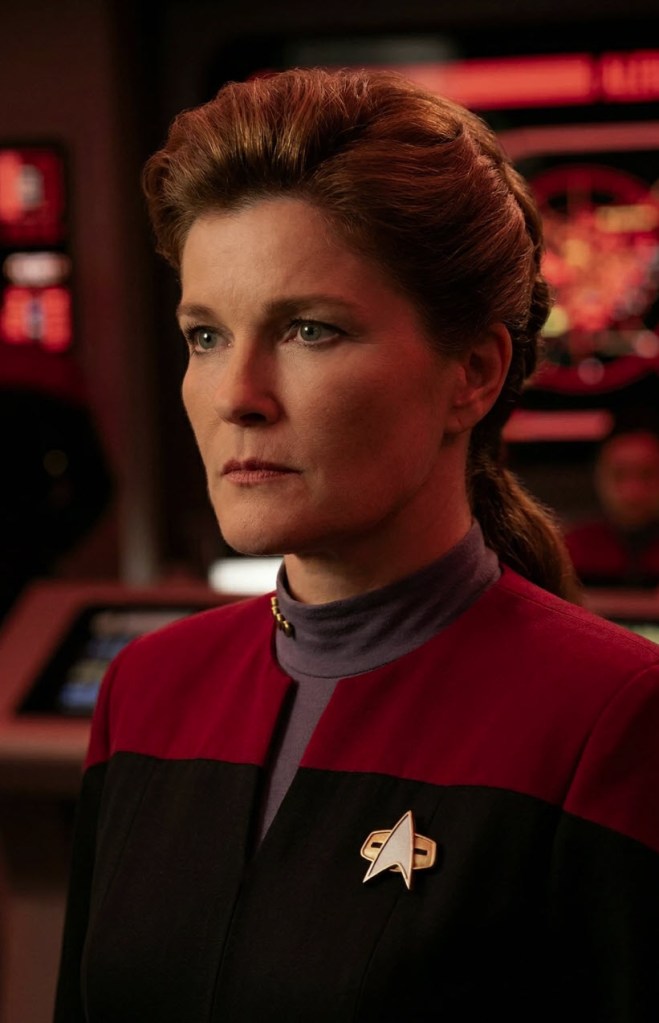
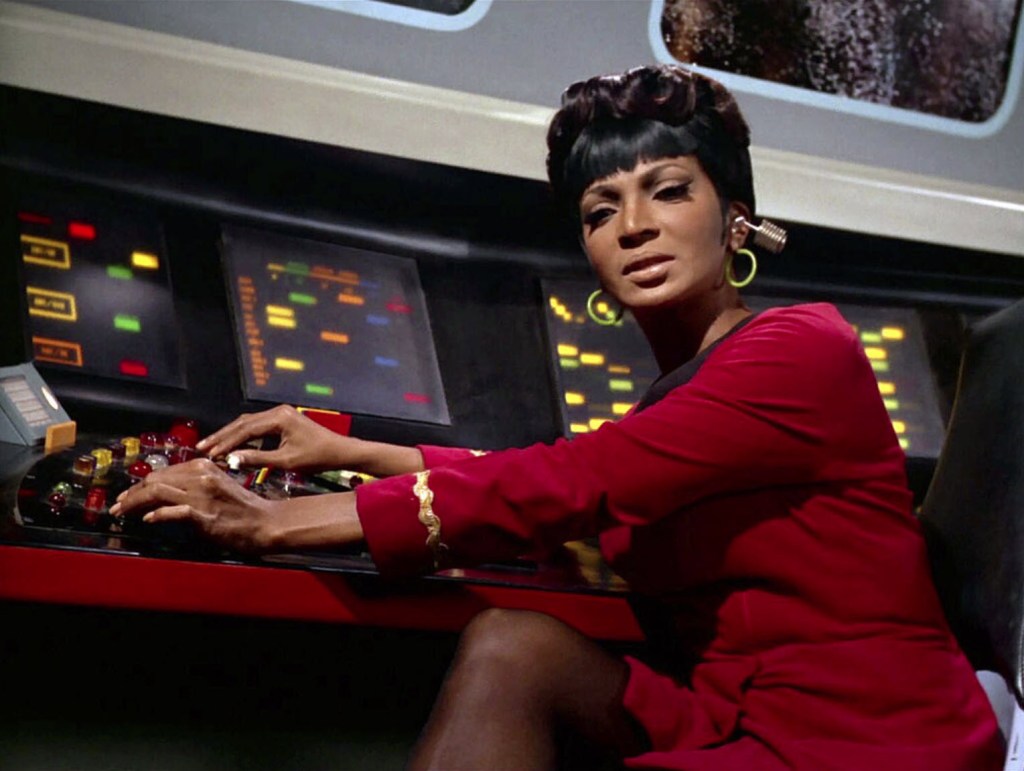
Next, and related, was the view that having a career and ambitions as a woman was a good thing. Again, not perfect, since the first female ship captain on the show did not appear until 1988 and only then in a “cameo” role, and not until 1995 before a main character was a female ship captain – Kate Mulgrew as Captain Kathyrn Janeway in Star Trek – Voyager. But what better role model for a budding corporate grunt like me?
All the captains on Star Trek had one thing in common. Inspirational leadership. Authority was recognized and used as needed, but so much more was achieved through collaboration, mentorship, guidance and teamwork. Those were all concepts I was not familiar with in my early work life – a time of authoritarian, prescribed rule. You did what you were told, most often without discussion. Star Trek taught me that it could be different. And the captains set the example themselves. They walked the talk.
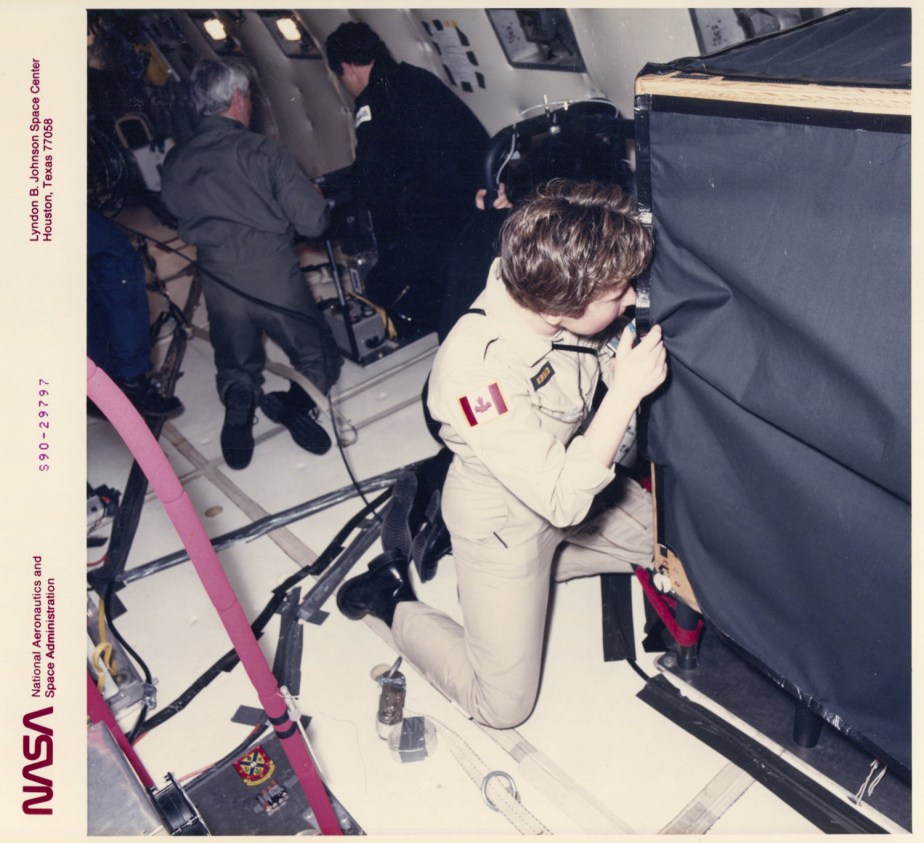
One other thing that all ship personnel had (usually) was dedication to service and to the mission of the ship. I learned about passionate commitment to a cause through them, and that led me to a decision to join the military in a reservist role in the Air Force in the early 1980’s. Frankly, my day job was boring and repetitive, and I wanted a way to capture some of the mistique of my Star Trek compatriots. I also took that lesson about stereotypes seriously, and applied for an airframe mechanic role, only to be asked by the Recruiter “do you know what you are getting yourself into?”. Yes I did. And I am forever grateful for that lesson, as hard as it was. It even led to a supporting role and flight time with the Canadian Astronaut Program.
I’ve always been the inquisitive type, curious about the world around me and smart enough to make some sense of it. But it came at the cost of not being a typical kid and teenager – I was quiet, shy and serious. I was top of my classes almost always (except for math to this day, lol). But I was the observer, not the centre of attention. I didn’t hang out with the cool kids. So it was absolutely eye opening to me to see a character like Spock on Star Trek, so totally different from his colleagues, struggling a bit but generally completely accepted for his differences and for his contributions. He had to meet everyone half way and also to accept them for their differences, but the unstated normality of those relationships really impacted me. It is possible to be different.
All that said, the two biggest impacts on me of the Star Trek series and its characters were the highlighting of meaningless cultural biases that seemed so important to many at the time and the easy partnership the characters had with technology and what it did and did not do for life in the 24th century.
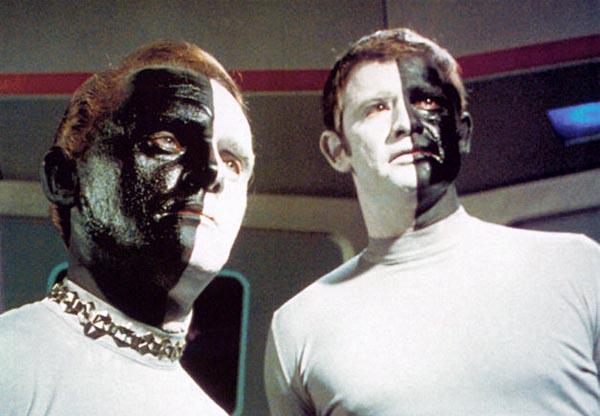
Of course, the epitome of the cultural bias stupidity was the episode where one character had chased another across the universe for 50,000 years. Why? Because their skin colour was the opposite of their adversary’s – black on the right side and white on the left, rather than black on the left side and white on the right. Of course, the inferiority was obvious and the persecuted had to be exterminated. The stupidity of that behaviour in our society could not have been better illustrated. Sadly the conclusion of that episode was not a truce, but a continuation of the battle after discovering that a whole society had been exterminated. Similarly, episodes revealing that sworn enemies Vulcans and Romulans actually had common ancestry also surfaced so many of the biases we still see today in our society. Watching those episodes left me extremely sensitive to my own biases, which I admit I do have. But I am lucky enough to be able to recognize them when they appear and hold them in check. Thank you, Star Trek.
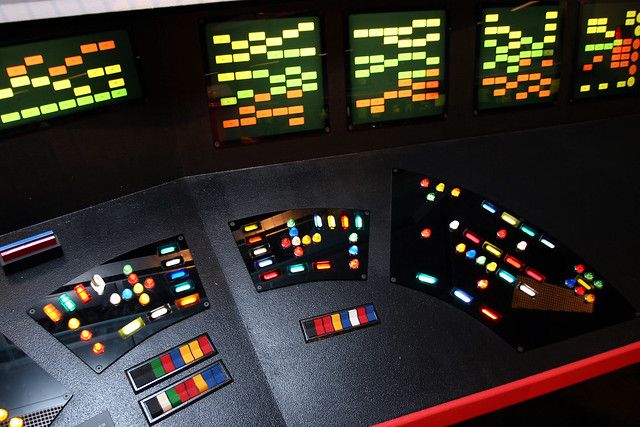

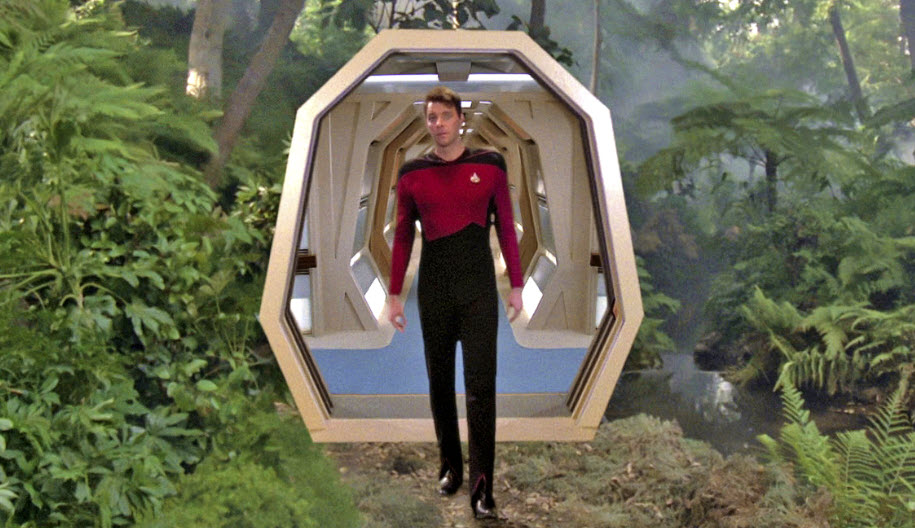
I’ve always loved gadgets and tech. That is probably the main reason I turned on the show to begin with. Looking back, it’s quite funny how they were able to depict a technologically advanced society with only 1960’s-1990’s technology available to them. Flashing lights were a good substitute for a supercomputer mainframe and data centre. But more to the point was the way the series depicted the interaction of biological life forms and machines. The biological life forms had conversations with their computers, relied on them to bring all the facts to the table, and used them for entertainment and escape when needed (the holodeck), used them to control systems where instant reaction time was important. Life was more convenient (food prep, lighting control, automatic doorways, etc.). And anything could be scanned. But at no time did the computers take over their lives, subject them to scams and frauds or create an entire generation of socially deprived beings. In fact, the recurring presence of the Borg in later episodes showed the disaster that could befall us all if we let technology take over. It’s a lesson we could very much use today.
That said, today, I have a watch that monitors my health, various Bluetooth devices that track my activities and patterns, and entertainment devices and home control devices that respond to my voice commands. Overlaid on all are the emerging AI technologies that, if used sparingly and correctly, make it so much easier to get things done and to get meaningful information to guide me. The future truly is now. And Star Trek helped me get ready for it.
I will be forever grateful to Star Trek for how its messages shaped my view of the world. I hope future generations can find a moral compass equally as compelling.


Well said Nina. I had no idea you were a Trekky, too. Up until my children were born I never missed an episode. Your article makes me want to go back and revisit and to catch up.
LikeLike