Sorry for the delay in posting this. A bit of rebranding for the website led to a new email arrangement which, despite all attempts to anticipate issues, went into the dumper on the day of launch (Feb 1). All is now fixed, but this article is late because of it.

It’s an interesting time for camera manufacturers and an even more interesting time for camera consumers. Simultaneously, on the same day, I read of Canon’s banner year, the problems every manufacturer has delivering product to market, the overall world decline in camera sales and Nikon’s gripping financial loss. The next day, Sony released a powerhouse camera with specs to entice any gear nerd.

But there is a most interesting irony in all of this: the as noted move away by consumers from conventional cameras, while at the same time the global glut of posted images that demand to be shared. It’s a bit frustrating, really, reflecting a society more focused (pardon the pun) on convenience, instant gratification, social networks and recordings of their personal experiences rather than on art, culture, creativity and expression.
Some of those posted experiences leave a lot to be desired. I must say that I don’t care to know what someone had for breakfast or how far they jogged that morning or whether they can balance their dog on their head. But, I must admit that even I enjoy getting photos of my young great nephews, smiling and laughing, occasionally while covered in food.

So social experiences definitely have their place. Some might even argue that they present a more creative outlet for everyone, not a less creative outlet. Coming up with an idea that makes us laugh at these most trying times does deserve applause. And especially when those experiences have to fit on a phone screen or be contained within 30 seconds of view time.
But artfulness is not art, craftiness is not craft. I still need my fix of both. And that is harder and harder to experience, I’m finding – not because of the pandemic.
Every generation of photographer has faced the same issues. Changes in technology lead to changes in what society finds appealing (although it’s a bit of a chicken and egg discussion about which comes first). The very fact that an image could be captured (after minutes or even hours of exposure) was the first great appeal of photography in the 1800’s. Then only the very rich could afford to do those captures, and the images memoralized either family generations or big industrial or political accomplishments.
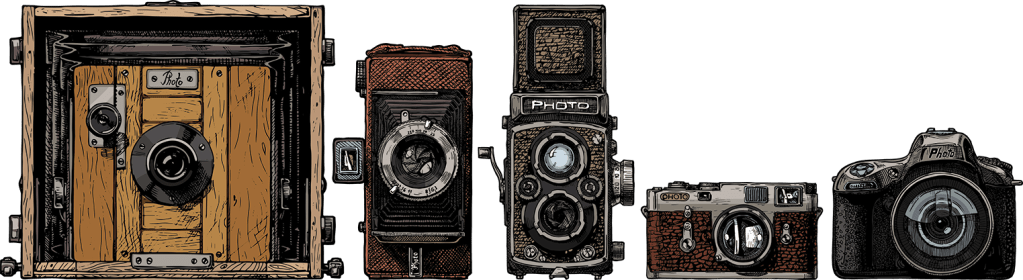
“Instant” cameras and disposable cameras brought the same capability to the average consumer in the 1960’s and that was where I first discovered photography. I remember the square plastic boxes, with round plastic lenses and the flash “cubes” that attached to the top, fired once and were discarded. Then the big advance of 4 shots per cube. It was amazing. My family couldn’t afford film, so we have little to no such instant memories, so only when I got my first job and had my own money could I spend just a bit on this new “fad”.
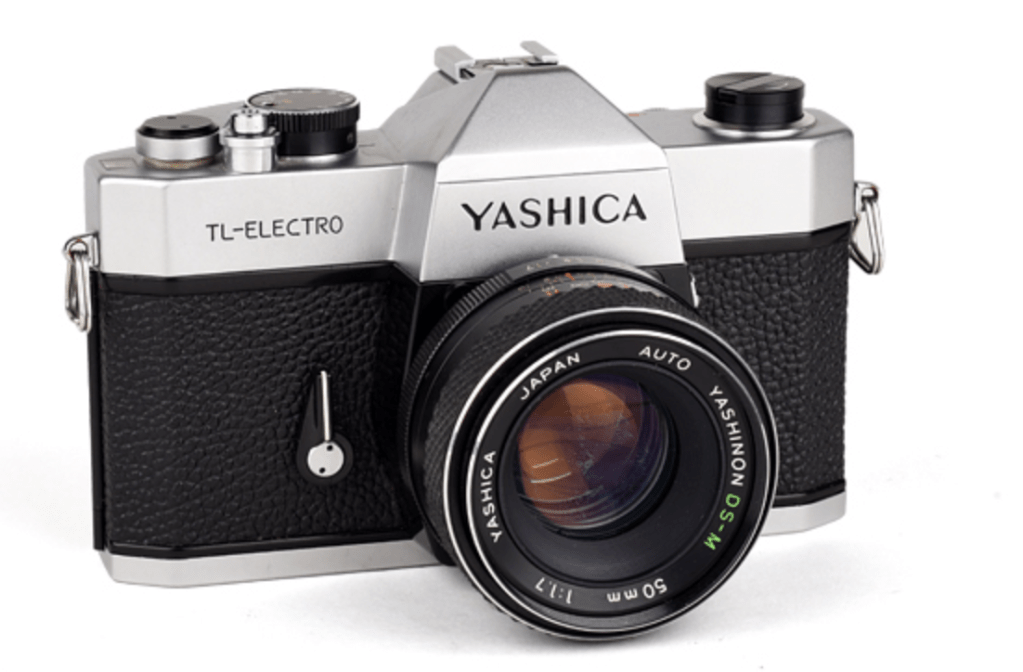
It was incredible when I actually bought my first real interchangeable lens camera, a Yashica Tl Electro in the early 1970’s. I couldn’t really afford it, but I didn’t care. I wanted it, and going into debt was ok with me. My first taste of instant gratification and of compound interest! I only had one lens for it for a couple more years, but that was ok too.
Then, career and other demands took over and being immersed in photography was not really an option. Like everyone else, I took pictures on vacation and for special events. I always said I would get back to it and learn the “art” of photography, but never did, until I retired. I still have that camera, and it still works, although I don’t use it now.
It’s now been 6-1/2 years since retirement came calling. I’ve immersed myself in all things photography for that whole time, including two full years at school. It’s been glorious. And yet, I honestly can’t yet say that I am an artist. I love the technical challenge of taking a good picture, but so easily miss the best angles and perspectives and stories. I watch the true artists around me not worry about their gear (beyond the basics) and create magic with a unique view or dash of colour. That’s what I want, that’s what I need. Not the instant gratification of 500 likes.
But I honestly have no idea how to proceed. So I’ve been procrastinating more than I would like. Ideas for projects scribbled on paper but not planned or executed. Bits and bites of tabletop scenes loosely stowed in the spare room, waiting for ?
I don’t seem to be alone in this. Numerous admired photographers lament the fact that they are stifled right now, even when they have good ideas to pursue. Some of it is just opportunity – “stay at home” doesn’t provide much of that. But there’s a mind shift at work too. I’m worried that we won’t recover when the authorities finally say we can.

One idea is to try a new form of art for a while and see if that kickstarts the other. For the next few months, I’m going to try learning to play piano. And to get out my drawing pencils from school. Perhaps the emotional beauty of a piece (assuming I don’t butcher it completely) or finding just the right shading on a pencil sketch will bring back the brain cells that are stifled. Who knows. But I have noticed that the best photographers (those who make art, not pictures) are also artists in many other ways ranging from painting to the preparation of food. So let’s give it a try. I’ve always said I love learning something new. It’s time to put money where my mouth is. Come on brain, show me what you got!
 I’ve decided in 2021 to step out of my comfort zone and try new things. Why? The residue of 2020 and its horrible effect on my well-being, plus the fact that in 2021, I will officially become a senior citizen. Both have been and are scary. But in some way, both have inspired me to fight back. Getting older reveals obvious changes in body and mind, and I want to control both of those if I can. My biggest fear, revealed
 Mid-December. Last blog of the year. Early darkness and grey, usually rainy days. Nothing to be glad about. Except that this year is coming to a close and Covid-19 vaccines have just been approved for both Canada and the US. This crap will soon be behind us. The only reason to rejoice. But you know what would be worse? Not adhering to public health measures, getting sick and dying a few weeks before you are scheduled to get a vaccine. That prospect should really make you determined to stick it out. And it would really really make your family angry if it happened. So don’t drop your guard now. Just a few more months. Hang in there.
 It seems that everyone is weighing in on the move toward more and more machine-powered editing choices, also known as artificial intelligence or AI-based editing. What surprises me most is the number of commentaries where the writer admits to never having seen the capabilities being criticized, but the mere thought of machine-powered functionality must invariably mean both loss of control for the artist and cookie-cutter results.
  But I digress, so back to photography. Have you ever stopped to consider the magical process that allows us to go from camera to screen to print? With all of us staring at screens so much more these days, I started to wonder about the specifics. I guess I have time on my hands and I am a nerd. So here’s what I found out…
 It’s been a trying year to say the least. Lockdowns, restrictions, cancellations, disappointments, even changes to things as simple as ordering food. I went to a local take-out place recently, only to be told that no more than 2 could be inside the take-out order area and that once my order was placed, I had to wait in a pre-marked parking area, in my car. Businesses and people are adapting. I have to admire how well we are adapting. But it still sucks. And on top of it all, my blog host, WordPress.com, decided to completely replace the blog editor I was familar with. Hence no posts for the last two cycles. An old dog can learn new tricks, but it sure takes a lot longer. I decided recently that I needed a break from it all, and with restrictions in place, took a trip north to two parks.