Best and Worst – For Whom?

A very Happy New Year, everyone! Hope that you all have the best year ever in 2024!

I had an interesting experience recently. Many of the YouTube channels I follow have a tradition of publishing their predictions for the coming year, as well as their assessment of the best and worst products of the past year.

In one such review (and I won’t name the channel), the reviewer put out a poll to their viewers and asked them to weigh in on the best and worst cameras of 2023.

I’ll just analyse one of the results: the worst camera. The camera voted as the worst camera of the year by that crowd of several hundred (wonder what statisticians would say about that response rate with a subscriber base of 50K…), with 54% agreeing, was the Canon EOS R100. So just above break even. And that was deemed worthy of a dedicated video. Ok, then.

The Canon R100 was released in July 2023 for a retail price of $799.99 CDN, with the included RF-S 18-45 f/4 kit lens. The camera was marketed as an entry level, first interchangeable lens camera, for new content creators and those moving from their cellphones to their first real camera. It was marketed as the replacement for the T-series of DSLR’s and the M-series of early mirrorless cameras (which have since been discontinued). It provides a low cost entry point with some, in my view, admirable features taken from its higher end brothers and sisters.

But the complaints of this particular group included: no flippy screen and no touch screen and no high speed burst rates or high megapixel count. So obviously a piece of crap. Seriously?

This made me wonder about the standards generally used by these reviewers to assess best and worst. At the end of the day, it takes a lot of skill to offer an objective view of a product, particularly when you yourself are an advanced user of typically much more sophisticated products. Tony Northrup, long regarded as one of those with a lot of this skill, called the EOS R100 a “capable” camera. So why such a difference in views?

In this case, I think it boils down to the simple task of crowdsourcing an opinion. The channel in question is known for mining the opinions and research of other people and makes its name by packaging those for delivery and saving you the time of going out to do your own research. It doesn’t really offer unique perspectives – only those published by others. So it’s not surprising that an opinion on best and worst of the year would be sourced the same way.

Apart from that, I wondered why there was this chasm of divergence in views between Northrup and this other channel. I guess it comes down to what you personally mean by best and worst. The biases that you apply to an opinion are the foundation for debate in a democratic society and we relish those. I certainly do. But I also expect to see a factual basis for a particular viewpoint. And maybe even an agreed standard way of assessing something that purports to provide a ranking at the end of the day. That didn’t happen here in the case of the poll. No standard questions were provided, no guidance on what to consider and what to leave out.

Separately, another channel I very much respect (and which also will not be mentioned) conducted a poll of viewers as well to determine the best cameras and lenses for the current year. Not surprisingly, the cameras and lenses that won top prize just happened to be the ones used by the channel owner and the majority of its viewers.

Manufacturers are partly to blame for this divergence in views as well, shaping expectations of the next great thing by plugging speed, capacity, automation and the quality of the results. At the highest price points, that makes sense. But those same expectations now seem to be applied to more budget friendly options, and is the source of most of the “indignation” and complaints found online when a budget product does not deliver what Joe Public feels it should. In this case, it’s a ridiculous list of expectations in a camera that costs less than 10% (with lens) of the highest price models in the same family (without lens). 

In fact, Tony Northrup, in one of his most recent videos, made the case that its time to stop pumping out more megapixels and more speed, and instead make the gear more usable, with things like built-in face recognition security to help prevent thefts, LCD screens you can see in the sunshine, internal storage and reliable wireless transfer of files.

And I guess as a final comment, those same manufacturers (and channels like the one mentioned) are creating an even bigger problem, convincing us (or trying to) that we need those extra features and capabilities just to be functional. In 2015, I purchased a Canon EOS 5D Mark III, which at the time was regarded as one of the best DSLR cameras on the market. It has 20 megapixels, no flippy screen, no touch screen, no high speed burst rate and no tracking of human, animal or insect. I still own the camera and still use it regularly. It gives me the same great quality images I expect from any Canon pro camera. It’s still listed on Canon’s website. But I guess against the standards of the aforementioned channel, it wouldn’t even make the list of has-beens. 

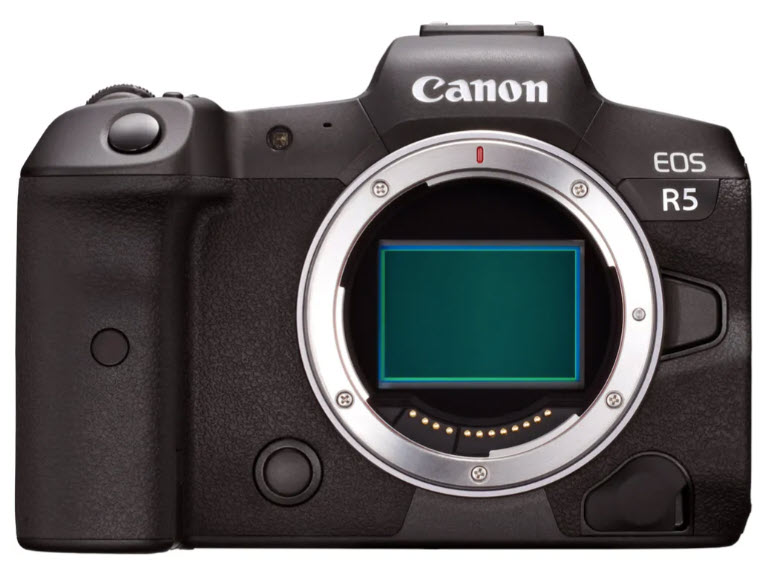
That said, in all fairness, I also own two of the EOS R series cameras: the R5 and the R6 Mark II. Both serve very specific purposes and fill very specific needs. It was NOT the hype that lead me to these purchases.

The bottom line: take reviews and gear rankings with a grain of salt. Understand the basis of the opinion and judge if the person giving the opinion is worth listening to. It wasn’t in this case.

Space: The Final Frontier (Part 2)

A few days ago, I published a single image that was the result of months of elapsed time (days of actual time) and represents the most effort I have ever put into a single photographic image. The image? The Rosette Nebula, a hydrogen gas cloud in the Milky Way Galaxy, our galaxy. These gas clouds are either stellar nurseries or the remnants of stellar explosions. Either way, they populate the sky with amazingly photogenic objects.

Rosette Nebula

These gas clouds either emit or reflect light. As such, we should be able to photograph them as we would other subjects, right? While all the photographic “rules” apply about exposure, composition, white balance, sharpness and colour saturation, they are multiplied exponentially when dealing with objects that, in this case, are a whopping 5,000 light years from us in distance.

Continue reading “Space: The Final Frontier (Part 2)”

Hybrid Shooting

YouTube video content creators often refer to themselves as “hybrid shooters” because they use cameras that combine still photography and videography in the same equipment. The term has been mis-used for a long time, and I feel it necessary to set the record straight.

This is especially true today because in this age of multi-channel content creation, I feel that a hybrid shooter is really someone who uses multiple devices to create content, not just one device built with multiple capabilities that is repurposed strictly for video. But first, let’s explore a bit of history.

Continue reading “Hybrid Shooting”

Space – The Final Frontier

One of my goals as a retired senior citizen is to indulge all of the interests I’ve developed over the years, now that I have the time and frankly also the money to do so.

I’ve had a long standing love affair with all things in space and space-related. By that, I mean all things off our own planet. From the early days of the Gemini and Apollo programs in the US, I’ve been gripped by a fascination around what and who could be out there. And of course, Star Trek and its offshoots only served to romanticize the idea that strange, wonderful adventures and discoveries could lie beyond our atmosphere.

I had some good fortune when younger to connect with people that worked on these challenges, at least from the point of view of humans living in space. But I’ve come to realize that humans in space is more of a challenge than we know how to solve right now, and I will never live to see permanent residence of any human anywhere other than on the Earth. But there are other ways to explore beyond our tiny speck of a planet, and I have settled on astrophotography as that method for me.

Continue reading “Space – The Final Frontier”

Gifts for Me!

A little self-serving? Yes, it is. I admit it. But I’ve discovered that friends and family who aren’t into photography and videography often have little idea on what a hobbyist might like. So I thought I would throw out a few inexpensive but meaningful ideas for that last minute shopper with a photographer on their list.

Continue reading “Gifts for Me!”

How Much Technology is Enough?

There were a couple of articles recently about the growing role of technology in cameras, specifically along the lines of how technology is making photography easy – too easy to be truly artistically challenging, it seems. I’ve written about something similar before, in terms of artificial intelligence and post-processing. This is a bit different. It’s about how much work your camera should do vs. what you should do as the photographer.

I’ll link to one of those articles below, in which the author opens up that argument and concludes the opposite – that technology in fact makes photography more challenging, focusing the artist’s attention on the things that are meaningful and not on the things that are mundane. I agree with that view, with some limitations.

Continue reading “How Much Technology is Enough?”

Rumors and Leaks – Do We Really Need Them?

Are you an “insider”? Do you sign up for newsletters and online posts that claim to provide you with the latest “scuttlebutt” on what’s happening in technology? Do you eagerly absorb each one, hungry for that smallest detail? Do you politely argue with the creators that what they say is not the full picture, or could not possibly be true, or makes no sense if it was true?

I’m discovering that some of the most successful online posts and videos are about, well really, nothing. They are someone’s opinion about what we might see next or how the market might drive those choices. Some have gained a reputation for “accuracy”, even if only half of the posted information does come to pass over time.

The bigger issue for me, though, is why we need such “services” at all. I’ll admit that I’ve watched, even subscribed, to some of these sites, but find it more and more annoying to watch each episode – I usually turn it off after a minute or two. Sometimes I skip posts all together. So why do we bother with them?

Continue reading “Rumors and Leaks – Do We Really Need Them?”

Canon Third Party RF Lens Ban

Yes, I’m writing about this too. Everybody has. But my perspective is very different, so please keep reading.

I’m both baffled and annoyed at the indignant positions taken by many commentators, including folks like Tony Northrup, on the decision made by Canon to issue cease and desist orders to third party lens makers who are (were) producing RF mount lenses. Specifically, here’s the announcement (in case you really haven’t seen it):

Not his first offering on the subject, but in this one, Tony seems particularly hell-bent on trashing Canon for their decision. Although in fairness, he did choose to hide it embedded in a breaking news piece that focused more on Nikon (thank goodness).

The bottom line for Tony is that Canon is making a huge mistake by not allowing third party manufacturers to produce RF mount lenses, and further that Canon has chosen not to license its RF technology to those same parties, foregoing a HUGE revenue stream. SOOOOO many potential customers are saying that they will no longer consider purchasing Canon products because they need and expect access to less costly gear options to justify the huge up-front investment from them that Canon requires for access to its new line of cameras. And indeed, the commentary on most YouTube posts where the decision is trashed is exactly that.

Every once in a while though, there is a solitary voice commenting that the decision was indeed the right one. One of those voices is mine.

Continue reading “Canon Third Party RF Lens Ban”

DSLR vs. Mirrorless

Not sure why I haven’t written about this before. Maybe it was because the mirrorless market wasn’t yet mature or maybe it was because I wasn’t yet mature – at least in terms of my knowledge of the subject. Well, today is the day, and we’ll do a deep dive into one vs. the other.

Continue reading “DSLR vs. Mirrorless”

Camera IBIS and Lens OIS in Canon EOS R5 – How Good is It?

I’m afraid that this piece is going to be a little bit technical, so for those who aren’t inclined that way, but who own a Canon EOS R5 camera, let me just say that Canon has really brought it home here: a Canon EOS R5, equipped with a native Canon RF mount lens that includes lens-based image stabilization, can indeed get up to 8 stops of improved low light performance. That simply means that you can shoot images with shutter speeds up to 8 stops slower than you normally could and still get sharp, in-focus images in low light conditions. Up to 8 stops. Ok, that’s the non-techie part. And you already knew that anyway. Non-techies can leave now. But stay and continue reading. It seems that “up to” has proven very confusing. Read on to find out why.

Continue reading “Camera IBIS and Lens OIS in Canon EOS R5 – How Good is It?”