Early spring for my family is filled with birthdays, including mine. This year, the eldest sibling in our family reached 70 years of age. Who would have thought that day would come! Seems we were all just in our twenties, let loose on the world to make a difference.
My brother turned 70 and we gathered the extended family at a restaurant to celebrate. Mid-way, my sister suggested, and my niece’s husband took, a group portrait of all us old ones (I was going to use another word…) and that resulting image has now been shared with everyone through multiple printed copies. (Not shared here for privacy reasons.)
I realized as I printed the photos that we don’t have many family moments like these in pictures. A sad reality of growing up in a household where food and clothing were the priorities and a camera was a luxury we could not afford. But you don’t get a second chance at these. So I have a few thoughts on this subject.
It’s a sad reality for each generation that we tend to gravitate either to the familiar – people we know – or to the contemporary – people who are like us. That means same generation, maybe the same values, maybe the same challenges, maybe the same likes and dislikes.
It’s certainly somewhat true for me and something I have to work hard to avoid as I get older. Even in this age of endless social media, I now tend to seek and follow people who are closer in age to me than to the grandbabies in the family. It’s not because they share the same likes and dislikes, but more because they share the same challenges of age, mobility and have somewhat similar general life experiences as me (didn’t grow up in the Internet age).
I think it’s important to recognize these trends in us and maybe from time to time to step away from them. Here’s a couple ways I’ve done that.
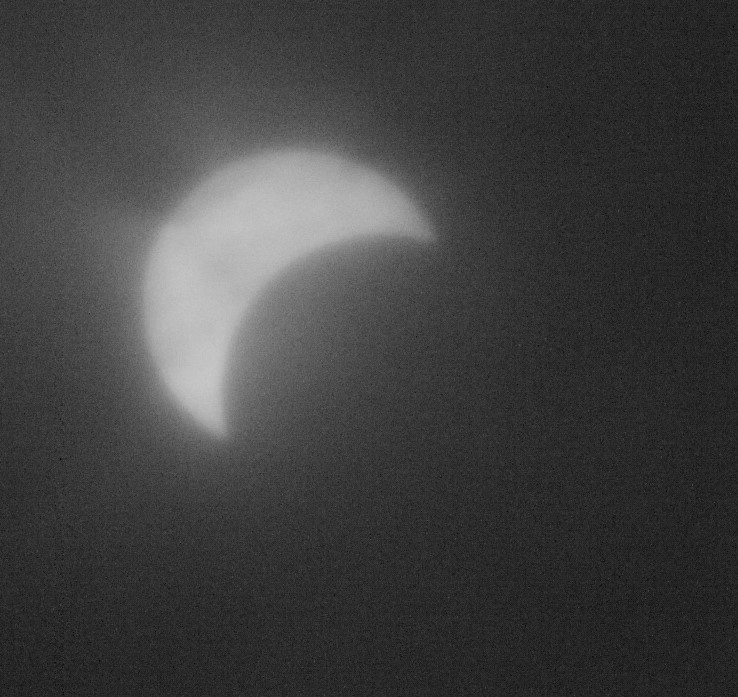
A week ago, like many of you, I packed up the car and headed out to what I thought was a good location to view the total solar eclipse. The first one in my area since 1979, it promised to be epic, if you found the right location.
Well I did and I didn’t. The location was good – open space, near water, where we would see everything surrounding us. The problem was clouds. They thickened as we were setting up and completely engulfed us at totality. No corona shots, no Bailey’s beads, no diamond ring, no nothing.
I learned a few things from this experience and thought I would share them.
For some odd reason, over the past couple of weeks, several of the landscape photographers I follow have posted videos about their YouTube experiences. Some have been active for years, others for just a couple. But all are reconsidering what the effort to produce content ultimately means to them and whether/how they should continue.
Most have noticed a slowing in the growth of their channel in both views and followers. Some of that appears to be a legitimate change in audience interests. But some of it also seems to be the ever present YouTube algorithm, which chooses how and how often a video is presented for viewing.
I rely on YouTube for my artistic “fix” and also for more mundane activities such as home repairs. So this change is troubling to me. What does it mean?
There is a raging debate right now among pro and hobbyist photographers alike about where to draw the line when editing images. Of course, this stems from the other big debate around the role of AI (artificial intelligence) in photography, but comes at it from a different slant.
Some time ago, Samsung was accused of faking a moon image to demonstrate the new low light (or was it astro?) features of its latest smartphone. Samsung’s response was that nothing is “real” in photography anyway so what does it matter?
Spoiler alert: I prepared this a few months ago, as you can tell from the images and clips (we are in winter here in Canada). Things have changed a bit in terms of the equipment used since this was prepared but the message is the same. Read on to the end to find out…
One of the things I have always found a bit ironic in photography is that as you become more and more proficient in the craft, you might seek out better equipment typically, and then, also typically, you TURN OFF all of the advanced automatic features of that better equipment and go “full manual”. I’ve never really understood that. Why would anyone do that?
I decided to try a totally different approach with an area of activity that is growing for me: vlogging. Instead of turning everything off, I’ve put together a basic but decent rig and turned ON all of the automatic functions I could find. I’m doing nothing manually. I think it’s working really well so far. Read on to see what I’ve done. I’ve included a few video clips as well for your entertainment.
I live near Toronto, Canada. On April 8 of 2024, my city will be just on the fringes of a total solar eclipse, with 99.8% of the sun plunged into temporary darkness. Niagara Falls, Buffalo and Rochester, New York, will be in the direct path of the eclipse. Might be doing a drive across the border.
The eclipse is expected to last almost 2-1/2 hours, with “totality” lasting about 4 minutes from 3:18 to 3:22 p.m. local time. NASA has a full web page dedicated to the eclipse at: https://science.nasa.gov/eclipses/.
Photographers and astrophotographers everywhere are making preparations to capture the eclipse. Some have elaborate plans to drive to, fly to and/or camp out in areas where they “know” there will be no clouds. They have multiple setups with long lenses, wide lenses, telescopes, video and still photography planned. There are whole collections of people from astronomy clubs, photography clubs and those just out for an adventure that are planning to camp out. Regardless of how you plan to experience the eclipse, if you do plan to capture it, there are some things you need to know.
I love to learn. Have all my life. And the winter season is a great time to learn new things, since most of us are stuck inside.
I’ve been concentrating on two paths of learning this winter: astrophotography image processing, and architectural image processing. The first deals with doing the utmost to ensure good image quality and colour representation in the tiny objects photographed in the sky. The second deals with adding tone, contrast and artistic adjustments to architecture to turn them into works of art (beyond the work of art that the architect already produced).
Both paths have brought me in touch with several teachers, respected in their fields. But they could not be more different in their teaching styles. One of the challenges I’ve had has been finding a teaching style that gives me the right learning experience for me.
A very Happy New Year, everyone! Hope that you all have the best year ever in 2024!
I had an interesting experience recently. Many of the YouTube channels I follow have a tradition of publishing their predictions for the coming year, as well as their assessment of the best and worst products of the past year.
In one such review (and I won’t name the channel), the reviewer put out a poll to their viewers and asked them to weigh in on the best and worst cameras of 2023.
I’ll just analyse one of the results: the worst camera. The camera voted as the worst camera of the year by that crowd of several hundred (wonder what statisticians would say about that response rate with a subscriber base of 50K…), with 54% agreeing, was the Canon EOS R100. So just above break even. And that was deemed worthy of a dedicated video. Ok, then.
The Canon R100 was released in July 2023 for a retail price of $799.99 CDN, with the included RF-S 18-45 f/4 kit lens. The camera was marketed as an entry level, first interchangeable lens camera, for new content creators and those moving from their cellphones to their first real camera. It was marketed as the replacement for the T-series of DSLR’s and the M-series of early mirrorless cameras (which have since been discontinued). It provides a low cost entry point with some, in my view, admirable features taken from its higher end brothers and sisters.
But the complaints of this particular group included: no flippy screen and no touch screen and no high speed burst rates or high megapixel count. So obviously a piece of crap. Seriously?
This made me wonder about the standards generally used by these reviewers to assess best and worst. At the end of the day, it takes a lot of skill to offer an objective view of a product, particularly when you yourself are an advanced user of typically much more sophisticated products. Tony Northrup, long regarded as one of those with a lot of this skill, called the EOS R100 a “capable” camera. So why such a difference in views?
In this case, I think it boils down to the simple task of crowdsourcing an opinion. The channel in question is known for mining the opinions and research of other people and makes its name by packaging those for delivery and saving you the time of going out to do your own research. It doesn’t really offer unique perspectives – only those published by others. So it’s not surprising that an opinion on best and worst of the year would be sourced the same way.
Apart from that, I wondered why there was this chasm of divergence in views between Northrup and this other channel. I guess it comes down to what you personally mean by best and worst. The biases that you apply to an opinion are the foundation for debate in a democratic society and we relish those. I certainly do. But I also expect to see a factual basis for a particular viewpoint. And maybe even an agreed standard way of assessing something that purports to provide a ranking at the end of the day. That didn’t happen here in the case of the poll. No standard questions were provided, no guidance on what to consider and what to leave out.
Separately, another channel I very much respect (and which also will not be mentioned) conducted a poll of viewers as well to determine the best cameras and lenses for the current year. Not surprisingly, the cameras and lenses that won top prize just happened to be the ones used by the channel owner and the majority of its viewers.
Manufacturers are partly to blame for this divergence in views as well, shaping expectations of the next great thing by plugging speed, capacity, automation and the quality of the results. At the highest price points, that makes sense. But those same expectations now seem to be applied to more budget friendly options, and is the source of most of the “indignation” and complaints found online when a budget product does not deliver what Joe Public feels it should. In this case, it’s a ridiculous list of expectations in a camera that costs less than 10% (with lens) of the highest price models in the same family (without lens).
In fact, Tony Northrup, in one of his most recent videos, made the case that its time to stop pumping out more megapixels and more speed, and instead make the gear more usable, with things like built-in face recognition security to help prevent thefts, LCD screens you can see in the sunshine, internal storage and reliable wireless transfer of files.
And I guess as a final comment, those same manufacturers (and channels like the one mentioned) are creating an even bigger problem, convincing us (or trying to) that we need those extra features and capabilities just to be functional. In 2015, I purchased a Canon EOS 5D Mark III, which at the time was regarded as one of the best DSLR cameras on the market. It has 20 megapixels, no flippy screen, no touch screen, no high speed burst rate and no tracking of human, animal or insect. I still own the camera and still use it regularly. It gives me the same great quality images I expect from any Canon pro camera. It’s still listed on Canon’s website. But I guess against the standards of the aforementioned channel, it wouldn’t even make the list of has-beens.
That said, in all fairness, I also own two of the EOS R series cameras: the R5 and the R6 Mark II. Both serve very specific purposes and fill very specific needs. It was NOT the hype that lead me to these purchases.
The bottom line: take reviews and gear rankings with a grain of salt. Understand the basis of the opinion and judge if the person giving the opinion is worth listening to. It wasn’t in this case.
It’s that time of year when we stress out about getting gifts for the people in our lives that already have everything. Seniors (and I am one) are particularly hard to buy for because of three main things:
They already have pretty much every possession they need. Buying more stuff isn’t really a priority for them.
New technology while fascinating, isn’t always useful to a senior. It becomes about convenience and ease of use, not more complicated and sophisticated functions. The stuff that offers “more” is often the stuff that is worth “less” to us.
And I guess there is a third driver too. Cost. New technology is becoming outrageously more expensive. You used to be able to buy a high end DSLR camera for under $1000. Now you are lucky to find new tech under $2500. Even I’m getting to the point where I say no bloody way.
So, what do you get for the senior photographer in your life? Family, take note:











 oldgirlphotography.ca