
A bit late with this post. It is summer, after all, here in Canada.
A couple of new announcements in July caught my attention because I use both products but also because they are clear examples of the changing face of photo editing.
 Skylum announced the upcoming release of Luminar 4, scheduled for sometime in the fall. Originally released in 2017, the company and the product have gone through some interesting evolutions.
Topaz Labs released the next version of its Studio software, completely redesigning the interface, and redefining its associated pricing model.
Both products are standalone photo editors. Both products also provide plugin options for Adobe Lightroom and Photoshop. But that’s not what makes them interesting. Continue reading “The Changing Face of Photo Editing”
 I can shoot an image, I can even stage a scene. But more often than I would like, I completely blank out when I bring the raw image onto the computer. I ask myself – now what? What’s the final look I want to achieve with this image? How should I present it?
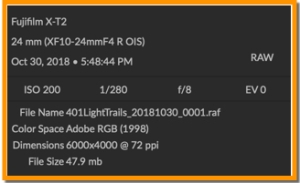 What does that have to do with photography? As it turns out, every part of a digital image is a set of values – for size, dimensions, camera settings, colour space, etc. We’ve long had the ability to manipulate any one value to our liking through the sliders we see in modern editing software. Now it seems we also have the ability to redefine broad swaths of data at once. Find out how.
  Experienced photographers who share their knowledge with new photographers spend a lot of time talking about composition and the “rules”. Leading lines, rule of thirds, negative space, etc. help to teach the eye what to look for when evaluating a scene. But they don’t spend a lot of time talking about why these rules matter at all.
 oldgirlphotography.ca