We’ve all done it. Used words like “fabulous”, “incredible”, “stunning” to describe photographic works that we see posted online or hung in a gallery. Sometimes we actually mean it. Sometimes we say it to be nice. We hope those words will be applied to our work too. In this age of social media, praise is often a given and we think something is wrong if it doesn’t come.
But eventually, we all reach a point in our own personal journey where we become more selective. We don’t offer praise as readily. Perhaps your own work also becomes a bit monotonous. Perhaps you have seen too many of the same presentation of a piece, even if expertly done. I hear that often happens to those asked to judge competitions. They may rate an otherwise superb item very low just because they have seen something similar before, often many times before.
It is said that familiarity breeds contempt. Even in art. We are taught from an early age to strive for the next victory, to be the best and to not stop there. But because art is so subjective, how do you know when you are looking at something truly stunning?
For me, it’s all about the emotional reaction I have to a piece. Does it make me stop doing whatever other thing I was doing to admire it? Does it take my breath away? Do I linger watching it? Do I struggle to describe what I am feeling?
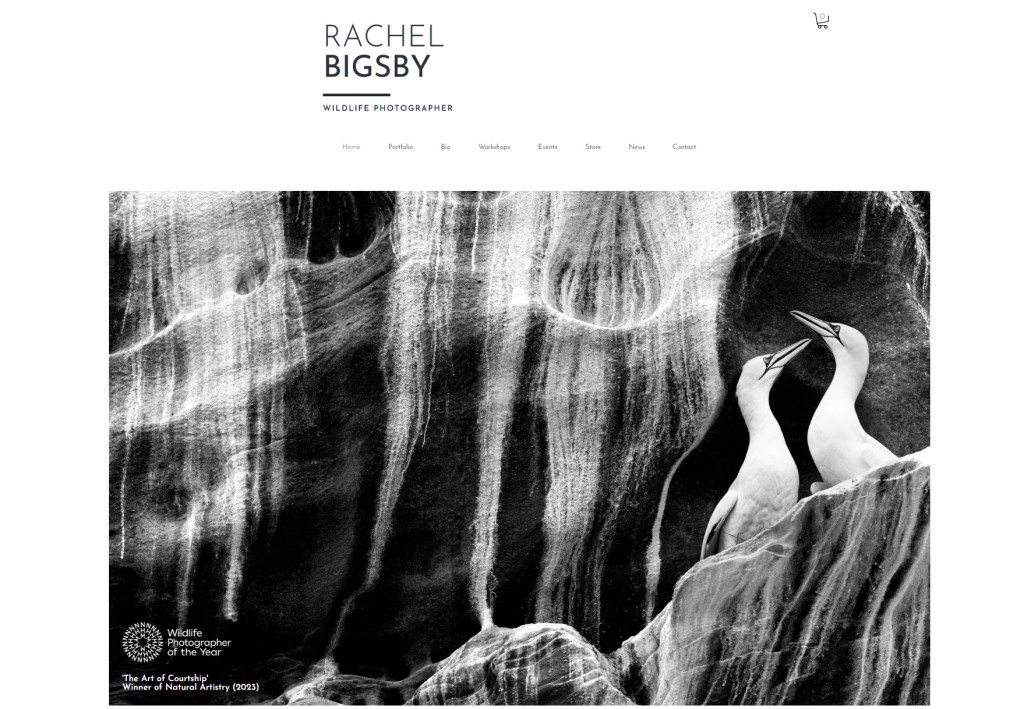
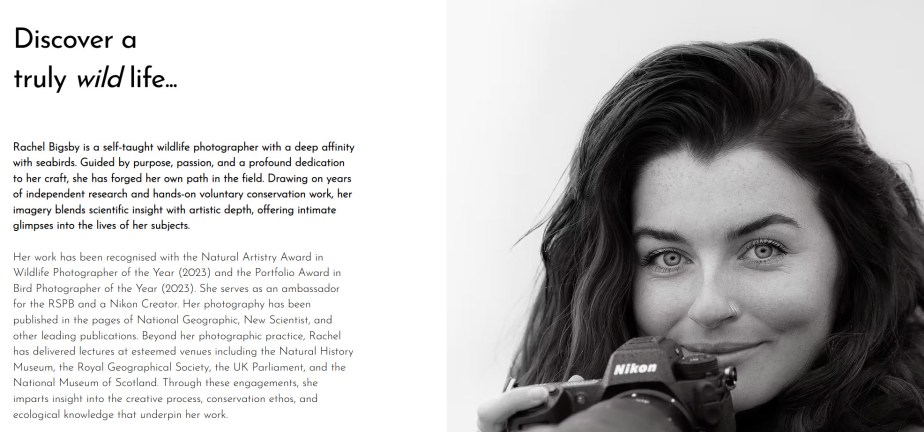
Take a walk with me. I’d like to explore just one photograph that I label as “stunning” and reveal why. This photograph was taken by a young insanely talented wildlife/bird photographer in the UK by the name of Rachel Bigsby.
One obvious way to initiate an emotional reaction to anything is to make it relevant to something you care about. For example, I have no interest in Formula One racing, so no matter what, I would not find emotion in anything stemming from that environment, including photographs. In fact, if anything, I would be distracted by what I consider to be the wasteful use of fuel for entertainment. But I digress.
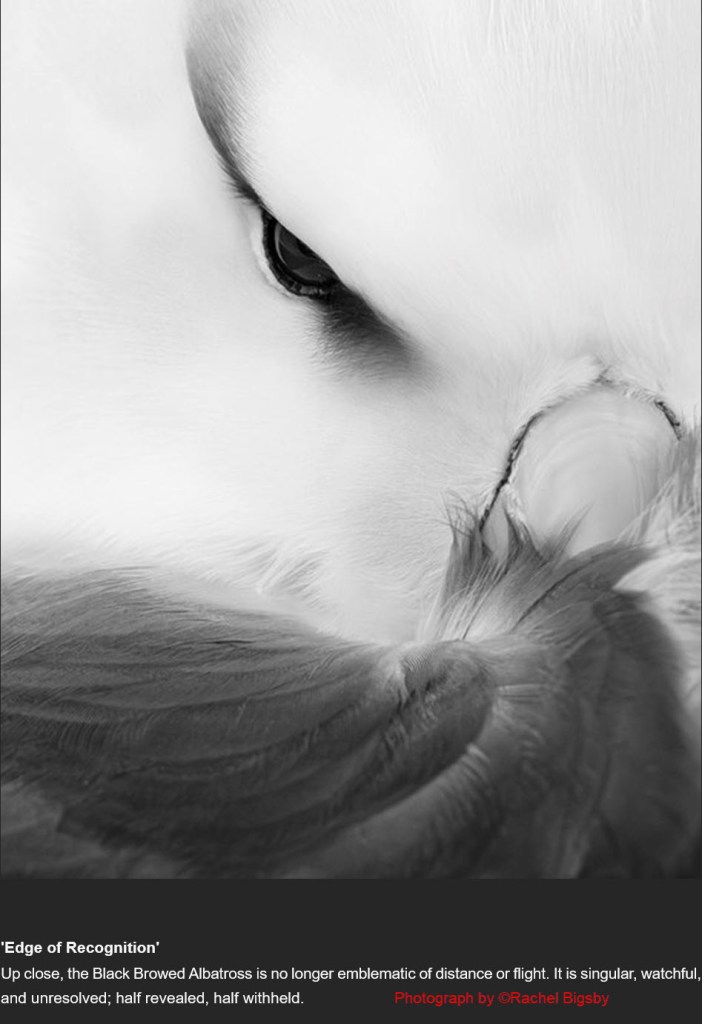
Rachel has taken many photographs that stop me in my tracks and make anything else I was doing at the moment irrelevant. This one arrived in a newsletter, and, on reaching that section, I could not move past it.
A person’s history, background, experiences and of course, character, all factor into what might create an emotional connection for them. When our background connects us to a photograph, we can actually have a silent conversation with it, exploring its features, asking ourselves why something is depicted as it is and, interestingly, finding answers. That happened to me here. What is it specifically about this photograph that captures me?
Its Mystery. Initially, you don’t really know what the photograph is about. Then slowly, it dawns on you that the upper left is an eye, but not only an eye. It is looking right at you, directly into your soul, with depth, shape and shimmer, perhaps wondering as much about you as you are about it. You continue to realize, slowly, that this is a photograph of a living creature. But you don’t know what creature it is, except that it has feathers. You also feel that you have stumbled upon a scene you were not meant to see, and have been given the privilege of seeing it.
Its Essence. The photograph captures not only the essence of a moment in time, but the essence of the creature. The lines are subtle but incredibly three dimensional, with variable degrees of depth despite the high key presentation. The close-up delivery by its design only captures the essence of the moment and the creature. You are left wondering what surrounds it.
A Lesson. There seems to be a message here, or many messages. This seems to be the most important element of any stunning photograph for me. I wonder what it is trying to tell me and I often come up with many different, sometimes contradictory, messages. Here, I sense both calm and alertness, observation and possible escape, subservience and domination. Totally contradictory in the most magical way. I’m completely focused on what the next move of the creature might be or what it might want from me, if anything.
The Unexpected. There is a style and presentation to wildlife and bird photography that typically relies on an action in a discernable environment, sufficient to also discern the species and the time of year. This image violates all of that, in that we have no idea who this creature is, what’s happening around them or what behaviour it is demonstrating. It is so far from the norm of wildlife photography. But that also makes it so compelling – we still see the character within.
Presence. These glimpses into the unexpected also serve to put me in my place. Far from knowing it all and having seen it all, I am presented with something I have never seen before. Something that has more majesty in a single eye that anything in my traditional collection. It serves to confirm the power and presence of nature, and clearly tells me what my place in it is. I feel privileged to view it, not entitled to.
Presentation. Of course, the technical features of the shot are critical to its impact – the choice of an extreme closeup, the crop, the high key delivery, the shadows and highlights, the angles of the complementary features, the vertical framing. Choices few of us more mundane souls would have made that work so incredibly beautifully here.
I’ve gone to art gallery opening nights where a multitude of artistic praise is levied on the artists on display. Sometimes it can seem a bit contrived, as though the curator is reaching for something nice to say. You might think that here. I assure you everything above is heartfelt. I find it so very fascinating that I can be stopped in my tracks by an image, and be so immersed in it that I can’t move on. This is really the first time I have tried to understand why. I’m glad we can react this way to the creations of those around us, but even more thankful that we have a natural world that can allow Rachel and others to offer us these views to begin with.
You can visit Rachel’s website here: