It happened unexpectedly, unannounced. One day I was minding my own business, reading email, and one popped into my feed. Oh, no, another ad. But this one was different. It was from that venerable king of creative editing software – Adobe. It was a reminder that my subscription for my Photography Plan would renew in a month. Ok, great. Then I saw it, at the bottom.
If you check the sales numbers of the top camera manufacturers worldwide over the last 15 years, you will see that sales have dropped by more than 90%. The market for traditional camera sales has clearly bottomed out, with most of us relying on our cellphones now to capture those memorable daytime visual experiences.
In contrast, the market for astrophotography is exploding, particularly in the 30-40 year age groups. Inspired by the Covid-19 pandemic, sales have skyrocketed. While still technically a niche subject, the number of companies now that offer specialized astrophotography equipment, along with the number of companies that will design and build a custom home observatory for you, is growing by leaps and bounds. There are also star parties around the world each year where enthusiasts gather to share experiences and ideas. YouTube searches for astrophotography confirm the growing interest, although there is a strange unexplained dip between 2018 and 2020.
My last blog post talked about a move away from technology to more analogue options, especially for young folk. This bucks that trend bigtime. Why?
Summer is coming to a close here in Canada. The evenings are darker and the mornings are just a bit cooler (although this past week we had a literal heat dome for 2 days where you would just start to sweat taking one step outside). But I have had a fantastic month and wanted to share it.
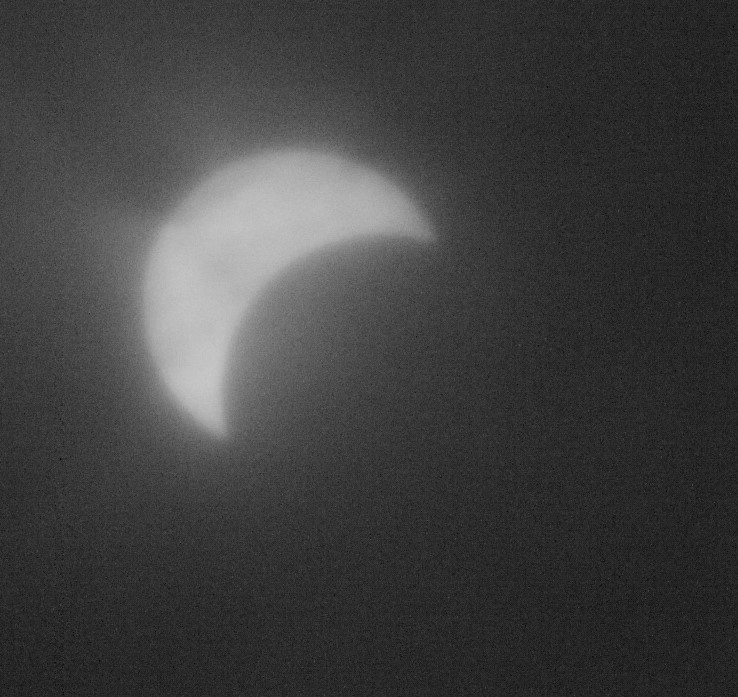
A week ago, like many of you, I packed up the car and headed out to what I thought was a good location to view the total solar eclipse. The first one in my area since 1979, it promised to be epic, if you found the right location.
Well I did and I didn’t. The location was good – open space, near water, where we would see everything surrounding us. The problem was clouds. They thickened as we were setting up and completely engulfed us at totality. No corona shots, no Bailey’s beads, no diamond ring, no nothing.
I learned a few things from this experience and thought I would share them.
I live near Toronto, Canada. On April 8 of 2024, my city will be just on the fringes of a total solar eclipse, with 99.8% of the sun plunged into temporary darkness. Niagara Falls, Buffalo and Rochester, New York, will be in the direct path of the eclipse. Might be doing a drive across the border. 
The eclipse is expected to last almost 2-1/2 hours, with “totality” lasting about 4 minutes from 3:18 to 3:22 p.m. local time. NASA has a full web page dedicated to the eclipse at: https://science.nasa.gov/eclipses/.
Photographers and astrophotographers everywhere are making preparations to capture the eclipse. Some have elaborate plans to drive to, fly to and/or camp out in areas where they “know” there will be no clouds. They have multiple setups with long lenses, wide lenses, telescopes, video and still photography planned. There are whole collections of people from astronomy clubs, photography clubs and those just out for an adventure that are planning to camp out. Regardless of how you plan to experience the eclipse, if you do plan to capture it, there are some things you need to know.
I love to learn. Have all my life. And the winter season is a great time to learn new things, since most of us are stuck inside.
I’ve been concentrating on two paths of learning this winter: astrophotography image processing, and architectural image processing. The first deals with doing the utmost to ensure good image quality and colour representation in the tiny objects photographed in the sky. The second deals with adding tone, contrast and artistic adjustments to architecture to turn them into works of art (beyond the work of art that the architect already produced).
Both paths have brought me in touch with several teachers, respected in their fields. But they could not be more different in their teaching styles. One of the challenges I’ve had has been finding a teaching style that gives me the right learning experience for me.
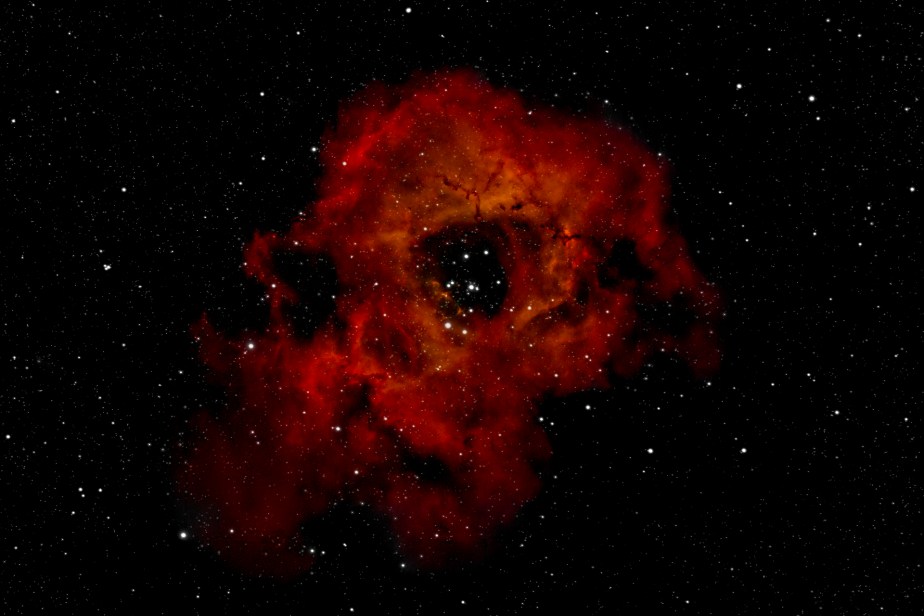
A few days ago, I published a single image that was the result of months of elapsed time (days of actual time) and represents the most effort I have ever put into a single photographic image. The image? The Rosette Nebula, a hydrogen gas cloud in the Milky Way Galaxy, our galaxy. These gas clouds are either stellar nurseries or the remnants of stellar explosions. Either way, they populate the sky with amazingly photogenic objects.
Rosette Nebula
These gas clouds either emit or reflect light. As such, we should be able to photograph them as we would other subjects, right? While all the photographic “rules” apply about exposure, composition, white balance, sharpness and colour saturation, they are multiplied exponentially when dealing with objects that, in this case, are a whopping 5,000 light years from us in distance.