
Hobbies are a great way to spend money. They are also a great way to spend TOO MUCH money. Just when you’ve bought the kit you need, you discover the one more thing that will make it perfect. That is certainly true in astrophotography, which is my latest creative focus.
I decided fairly early on that I would invest in only tried and true solutions, including techniques and gear that would fully support my enjoyment of the hobby without a lot of testing or tweaking. That strategy has paid off for the three plus years of effort. But just once, last fall, I decided that I would try another approach instead. I was looking for a way to control some equipment using a tablet or my phone, and there were several options, including one that had only recently been released a few months before. The appeal of that option was versatility: a claim that the device could handle so much more than any other available option for about the same price. I decided to give that a try. Find out how it went.
Startup products can be spectacular successes or epic fails – especially in the tech space. So I wasn’t prepared to spend a lot of money. My investment was about $300 CDN, which is not chicken feed, but not huge either.
The company, Touptek Astro, was founded in China in 2010 but only fairly recently got into its own branded imaging line and cameras for astrophotography. It seems that they or their divisions had been supporting and manufacturing other brands for many years and felt it was time to launch their own suite of products. As it turns out, most astrophotography equipment for consumers is actually produced by only 2-3 companies, in China, then branded and shipped by many different names. That gave me some comfort that my new trial product would have some history behind it.
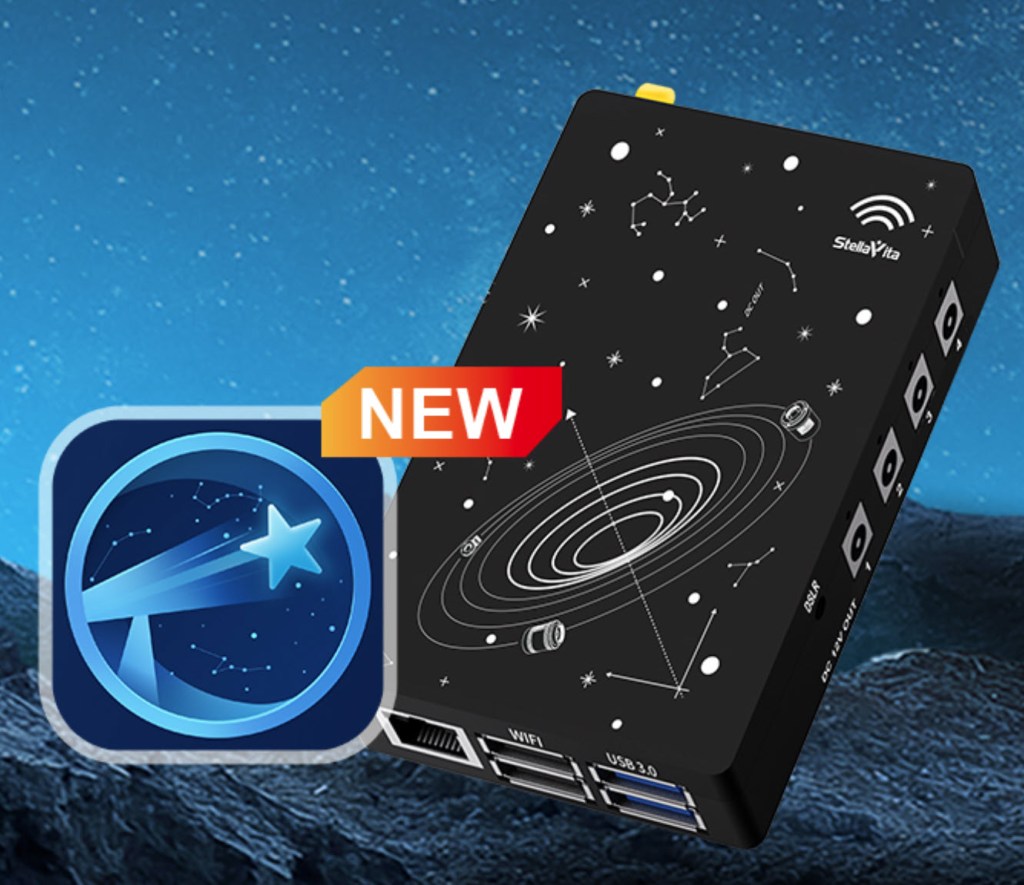
The item itself was the ToupTek AstroStation, now renamed, StellaVita. It essentially is a Raspberry Pie computer programmed to control astronomy equipment. Out of the box, it looked almost like a duplicate of its main competitor, the ZWO ASI Air. But in a step ahead of the competitor, Stella Vita was advertised to control a wide range of equipment from different manufacturers and not just equipment offered by its originating company, which was the case for the ZWO option.
That ability to control multiple makes of equipment is something that many in the hobby had been asking for. So there was excitement when this was released, including from me. My strategy until that time had been to limit myself to a single brand of equipment to ensure that it worked “out of the box”. That strategy had served me well so far. I wondered what would happen with my new toy.
I took the Stella Vita home, set it up, downloaded the latest firmware, connected my various pieces of equipment and started my first run – or tried to.
Several of my pieces of connected equipment could not be identified by the controller. It just did not see them.
Equipment that was seen did not always operate as expected. It would move in unexpected directions, move too far or not far enough and fail to return home when prompted.
The wireless connection also proved to be unreliable – constantly dropping out after a few seconds and not reconnecting. Several fixes were suggested online and none of them worked.
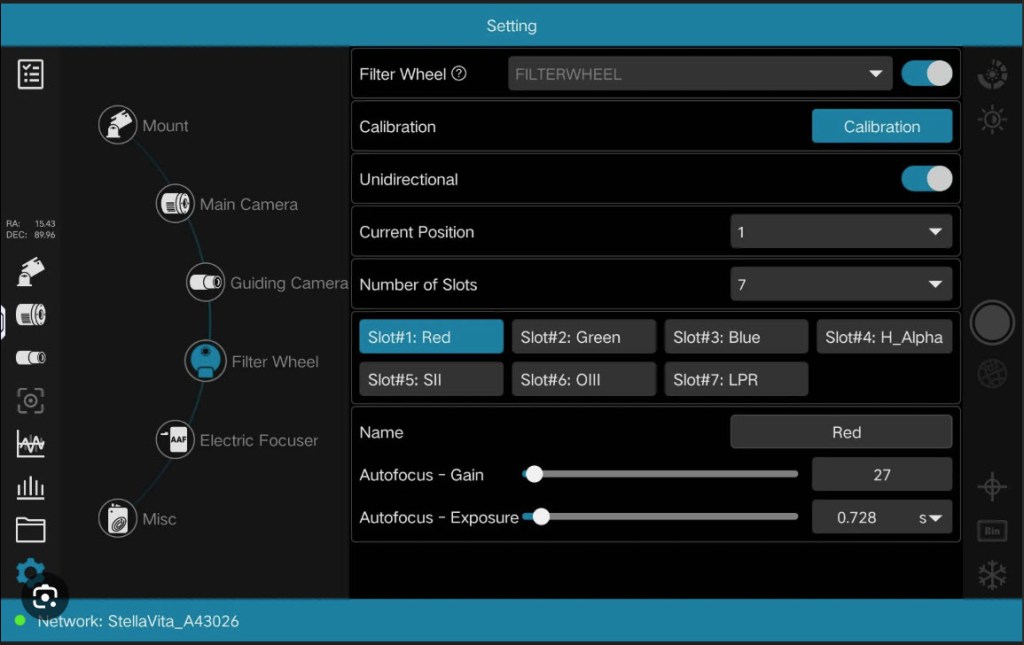
Lastly, the app itself was a bit basic, not intuitive and relied on short and long key presses to activate functions. Remembering which was which was annoying.
The astrophotography community is full of wonderful people who love to help each other. It is also full of wonderfully smart folks who love to tinker with equipment and to devise solutions that provide both band aid fixes and sometimes full blown elegant options that stick. My experience has been mostly the former.
I followed some of that advice to improve things but nothing worked. Eventually, I just gave up on my experiment and put the unit away, thinking I might sell it to someone with more patience and interest in tinkering. Product competition is a great idea, but it sometimes forces companies to release products that are not ready for prime time. That seemed to be the case here.
I then remembered some of the growing pains I had experienced when first getting into this hobby. Lack of knowledge and lack of insight into how things worked meant that problem solving was not easy and quick. That had changed for the most part, and I wondered if the same could be said for this company and this piece of equipment. I decided to hold onto the device and see what might happen in the next few months.
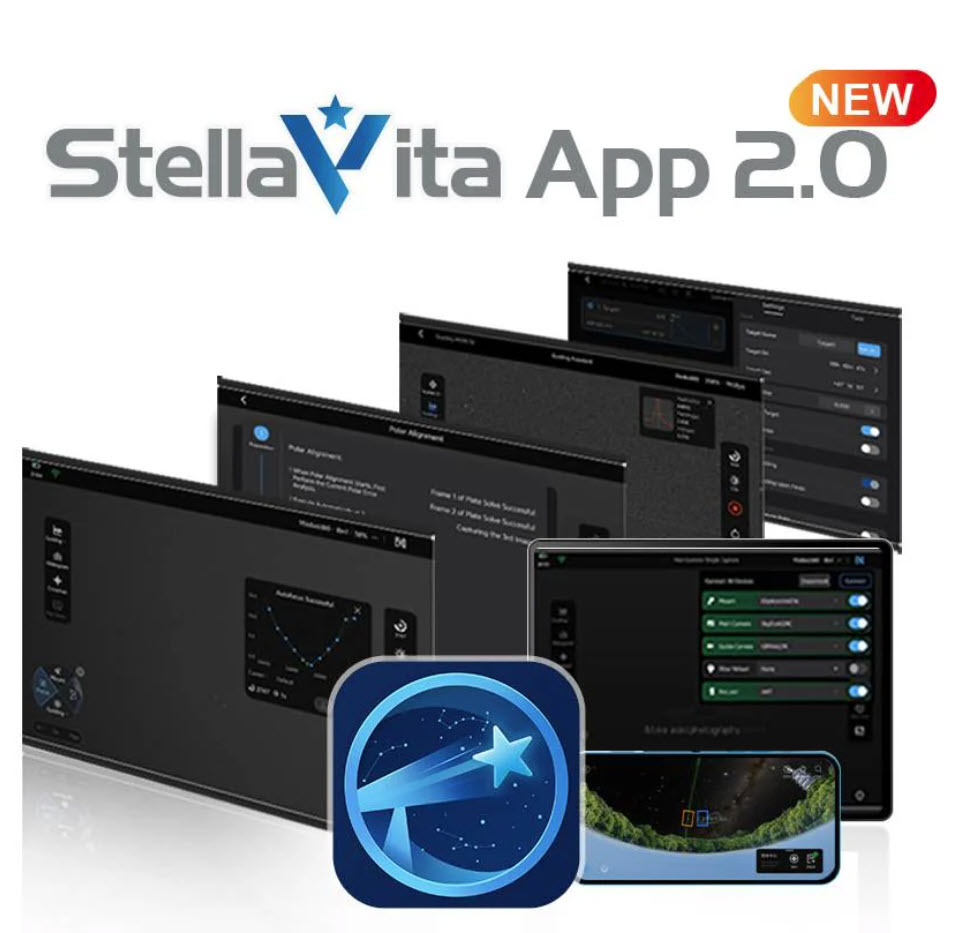
To their credit, ToupTek encouraged feedback and responds quickly to any messages sent to them. The astrophotography community wanted this to work and stepped in to help drive a better solution.
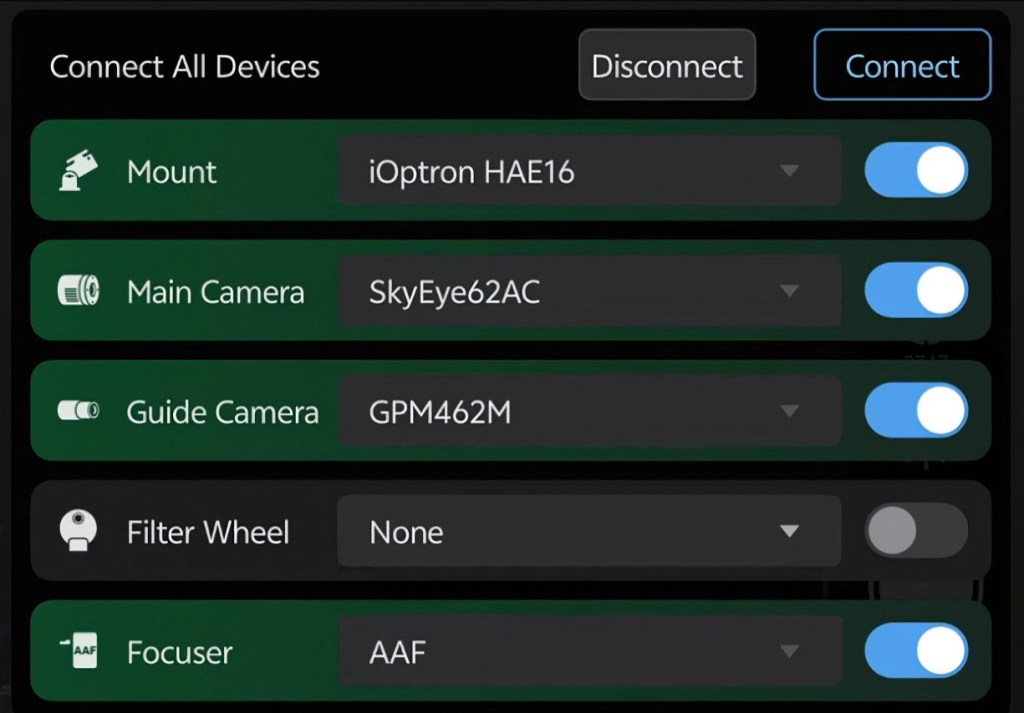
It is now six months later and the company has released a completely updated application, with new firmware. I decided to give things another try. What a difference a day (or in this case a 1/2 year) makes. The device connects easily and completely to my equipment, the menus are easy to understand and the connection is reliable – not perfect – but more reliable. Some of the functions are still not intuitive and easy, but we are assured by the company that they are working on them.
New technology is finding its way into all aspects of our lives and more is released every day. One decision we all make is whether to leap in and adopt it and when to do so. If you enjoy the thrill of discovery and don’t mind the agony of defeat, then you can maybe get a pleasant surprise by adopting early.
But if “just works out of the box” is the motto you prefer to live by, then well tested brand names will always be a better choice, even if they cost more. I’m glad I did this experiment, but don’t think I will do it again. I can’t take the stress and don’t want to spend the time on tinkering when I could be doing something more fun.
 oldgirlphotography.ca