
Frankly, it’s a question I’ve never thought about. Ever since I starting shooting digitally, and ever since I became aware of software available to edit, I’ve edited. But I’m preparing a short talk for a group of hobbyist photographers and I’ve discovered that some of them don’t edit, have never edited and have never considered editing. I find that fascinating. We will talk more about why they don’t edit in a bit.
There is a long standing debate about in-camera skills vs. post-processing skills. From the early days of photography, and rightly so, it was decisions about framing, composition, exposure, and using natural light and shadow properly that determined the end result. I agree with that perspective and continue to refine my skills in-camera. But artists being artists, more options were discovered for adding a unique look, a mood or an effect to that end result. Today, the options can be almost endless, including AI driven editing technologies. So let’s explore that a bit further.
How about first defining editing. Simply put, it’s anything you do AFTER taking the shot to allow you to present the photograph in the way you want. Sounds simple? Well, let’s get a couple of complications out of the way off the top.
These relate to digital photography:
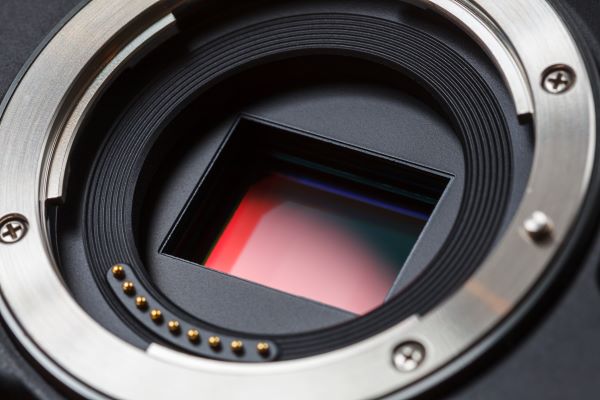
- If you shoot in RAW, what the camera saves is a series of 1’s and 0’s that document the colour and light that the camera sensor captured. That digital data has to be interpreted by software, even without any other “editing”, to be able to show you an image. Whether you view that RAW file on your camera screen, on your phone, on your computer or on your tablet, RAW viewer software is interpreting that information and it can look very different on different devices. Because of this interpretation, I call this a form of “editing”.
- Sensors can only collect RAW data. If you shoot in JPEG, the camera uses its own built-in interpretation profiles to throw away some of the RAW data and keep only the data needed for the profile you have selected. You might have profiles for things like “vivid colour”, “high key”, “low key” or “black and white”. In each case, some data is thrown away and the end result JPEG will use only what the profile requires. So shooting in JPEG is also a form of “editing”.
- Regardless of how you extract the end result, if your final destination is sharing by text or sharing on social media, those platforms have their own algorithms for processing your photo and will strip away any data they don’t need. So sharing is also a form of “editing”.
- And lastly, to get really pedantic, digital photography is NOT an accurate representation of the scene you saw. Our eyes have 20 stops or more of dynamic range; most camera sensors have less than 14. If you have ever looked at a digital photo after the fact and saw that some areas were too dark and other areas too light compared to what you remember, this is why. So even the act of capture is a form of “editing”.

I call those items above “passive” editing. Let’s now set those aside and talk about “active” editing – where you deliberately make choices about presenting the photo once it is out of the camera. There are really three reasons to edit actively: to overcome some of the complications I mention above, to overcome mistakes or bad choices made by the photographer (I use this a lot), and at its best, to emphasize the things in the photo that you want to showcase and de-emphasize the things that you feel are less important for your audience.
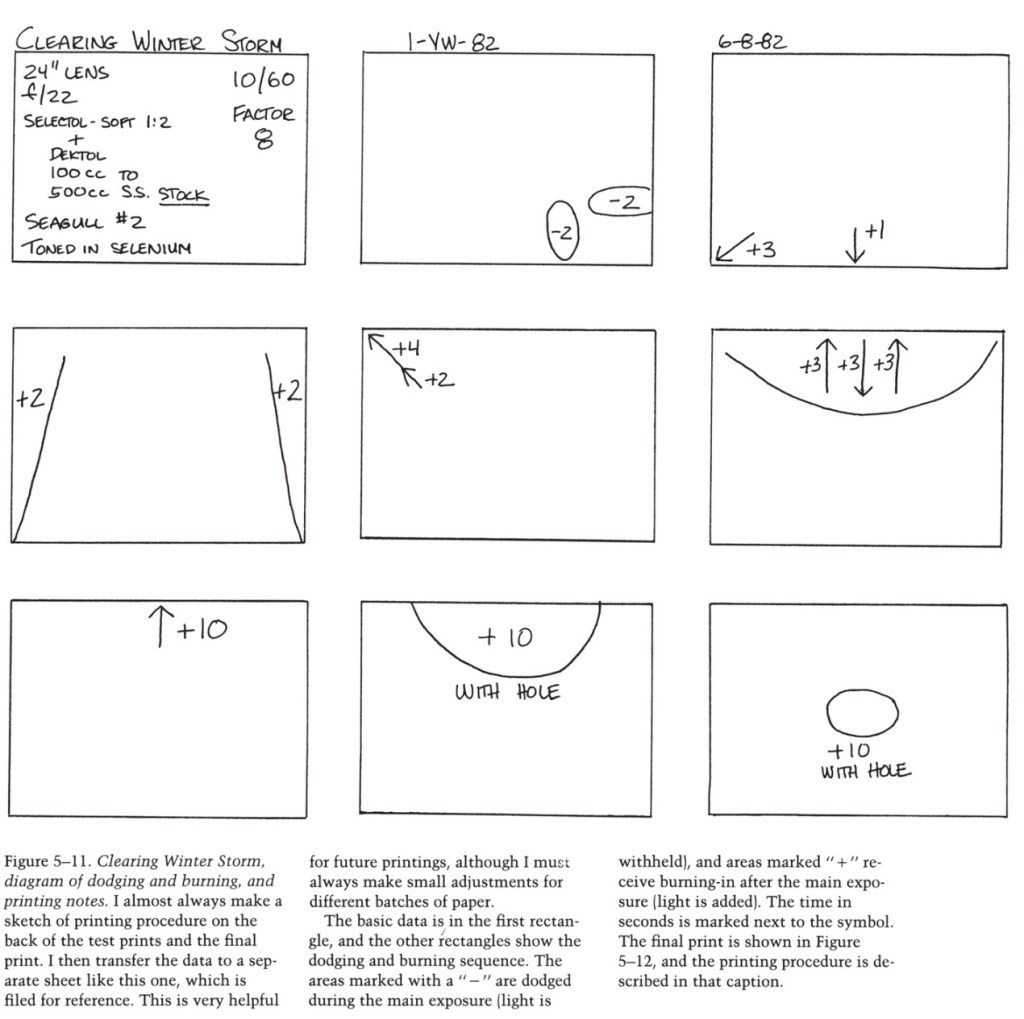
Editing, as mentioned, has been part of the artist’s toolkit almost since the beginning. Yes, you can edit even if you are shooting film. Editing here involves artificial light and chemicals to manage tonal range and colour choices in processing the film. It involves even the paper used in creating a print, and how you let in light through to the paper to create the print. Ansel Adams was my hero in this medium. He shot primarily in black and white, and used many many techniques to achieve a final result, including test prints at different exposures and mapping out exactly what tonal changes he wanted where. One small example is below (click on the photos to read the details):


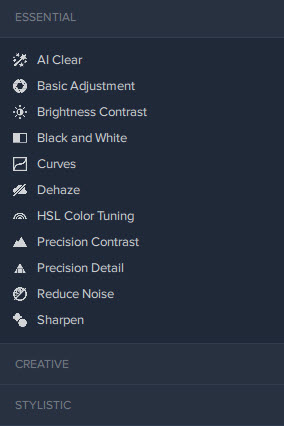
Thankfully, editing is very much easier today, through tools that generally include slider-based adjustments where you see the effect immediately. And that addresses one of the reasons I hear for not editing – it’s too hard to learn the tools. Let me quickly dispel that. Whether you buy separate editing software or use the tools that come natively with your computer (like the Photos apps on Windows or Mac), editing can be as simple as moving a slider on a screen to adjust an effect to taste, then moving on to the next slider. You really don’t have to know the technical details behind any of the sliders – you move the slider and simply decide if you like it, then move on. And you try each slider on the screen from top to bottom for a complete edit. At least to start. Easy peasy.

The second reason I hear for not editing is the time it takes. People don’t want to sit in front of a computer. Let me dispel that as well. If you are editing to remove those “passive” issues or to correct “user error”, those edits are very quick to apply – 20 seconds maybe. And the more you do it, the quicker it becomes. Yes, you do have to bring your photos into an application, figure out how to save the result when done, and save and distribute it, but again, not a big deal. And don’t think you have to edit every photo you take – really, I edit only those that I feel some personal attachment to – maybe 10% of what I shoot.
The last typical issue I hear about is the cost of editing. Editing software is expensive. True, there are paid applications with tons of features. Some (many) are now subscription-based, requiring recurring charges. But there are also free programs that will get you started, like the previously mentioned Photos apps on Windows and Mac (below). And see the sliders?


These free apps generally don’t allow for selective edits, like enhancing the green in my cat’s eyes, but it’s surprising just how much capability they do offer. So don’t let the price deter you. And when you are ready for more capability, there are a range of price options available.
The last topic I’ll cover is maybe the biggest issue of all: people tell me they don’t know what needs an edit and what improvements to consider. The photos look perfectly good to them out of camera. Yes, exactly – they look good, but maybe could look great. Well, that does require a bit of an investment of time. Most of us spend 5 seconds or less looking at a photo and move on. We never really stop to consider why we like it or don’t (except to maybe comment on the subject).

Start by expanding that time you spend looking at each photo so that you can start to evaluate what you specifically like and what you don’t like. Look at some photos on Instagram that have gotten great reviews. Is it the dappled sunlight on the hillside that catches your eye, or the smile on the subject’s face that seems to be featured somehow? Are the whites bright enough and the darks contrasty enough? Is the presentation happy or moody or mysterious? Does that treatment fit the subject? Are there distractions that take away from those important elements? Begin to learn to evaluate a photo like the ingredients in a recipe. What ingredients make your mouth water? What is “meh” or turns you away? In my cat photo above, I love her pose, but don’t like the distracting beige carpet in the foreground. I might crop or at least darken that area with a vignette. And I do want to make those eyes the beautiful deep green that they really are.
Editing should be as joyful as the experience of taking the shot. When I finally land on a photo that really speaks to me after editing, I feel great. I want to share it with the world. So if you haven’t yet, I encourage you to take that first step into editing. You won’t regret it.
 oldgirlphotography.ca
Well said.
LikeLike