
If you check the sales numbers of the top camera manufacturers worldwide over the last 15 years, you will see that sales have dropped by more than 90%. The market for traditional camera sales has clearly bottomed out, with most of us relying on our cellphones now to capture those memorable daytime visual experiences.

In contrast, the market for astrophotography is exploding, particularly in the 30-40 year age groups. Inspired by the Covid-19 pandemic, sales have skyrocketed. While still technically a niche subject, the number of companies now that offer specialized astrophotography equipment, along with the number of companies that will design and build a custom home observatory for you, is growing by leaps and bounds. There are also star parties around the world each year where enthusiasts gather to share experiences and ideas. YouTube searches for astrophotography confirm the growing interest, although there is a strange unexplained dip between 2018 and 2020.

My last blog post talked about a move away from technology to more analogue options, especially for young folk. This bucks that trend bigtime. Why?
When I first got into this hobby 2 years ago, the reasons it made sense were simple: I needed something I could do without leaving home (unrelated to Covid-19) and I needed something that was somewhat intellectually challenging but maybe wouldn’t require a lot of brainpower in my senior years. And of course, taking advantage of my photography background and interests was part of it too. Astrophotography fit the bill perfectly (or so I thought). Funny thing – I was a bit wrong on that idea of astrophotography not requiring a lot of brainpower. I have a 40 page “manual” of all the things I have learned. But read on…
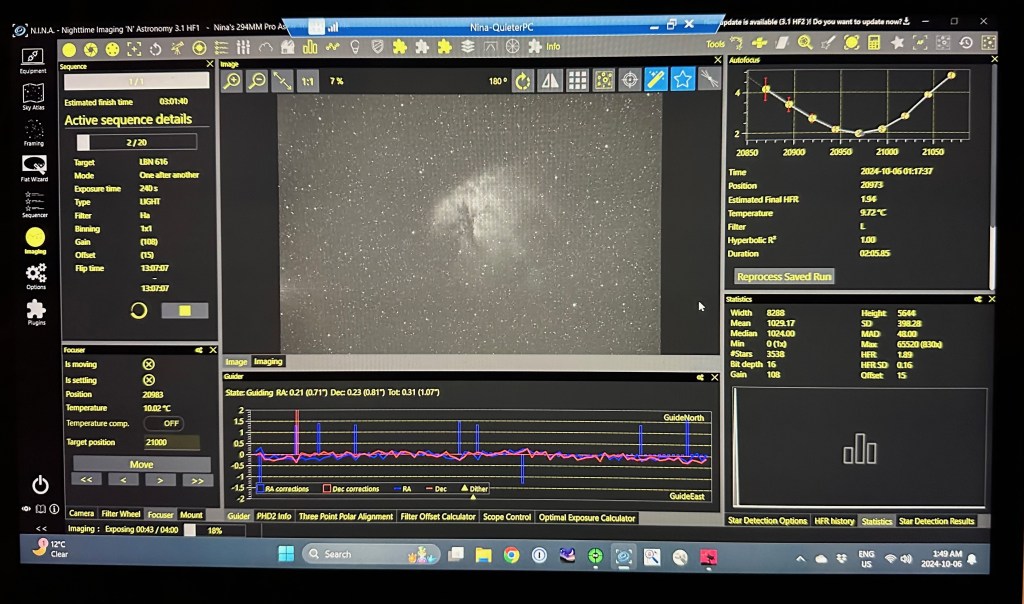
That need for something entertaining and challenging at the same time seems to be the case for many astrophotography hobbyists, young and old(er) when they start out. And it truly can be that. But equally, some that have gotten into the hobby specifically look for the most complex, most technically challenging hobby options they can find, in terms of equipment, techniques and targets. Astrophotography fits that bill as well.
I think the really great thing about this hobby is that you can make it what you want. It can be as fundamental as pointing your daytime camera at the night sky, or as complex as having multi-axis precision guiding through encoder driven mounts, and image capture with cameras, filters and software imaging 3 nanometer wide bandpasses of light that are then combined from hundreds or thousands of frames into a final image. Both ends of the spectrum can be fully satisfied. You can do it all or as much as you want.

You can also enjoy the hobby on your own or directly with other enthusiasts. You can be part of in-person clubs or online forums to share questions and ideas. You engage in the hobby after the sun sets, when all of your other obligations to family are done for the day, so that nothing else intervenes. That peaceful night sky with the surrounding quiet of a sleeping residential subdivision where I am the only one awake is very very calming. At least until the night critters show up, which for me includes racoons, possums, rabbits, cats, mice and coyotes. But even that is entertaining.
When things work well, it is relaxing, intellectually invigorating and just really cool. When things maybe don’t work well, you have the challenge of problem solving and a sense of accomplishment when the problem is solved. Lots of hobbyists love that aspect of the hobby. For me, that’s just meh! But I do admit a guilty pleasure when that occasional problem is solved.
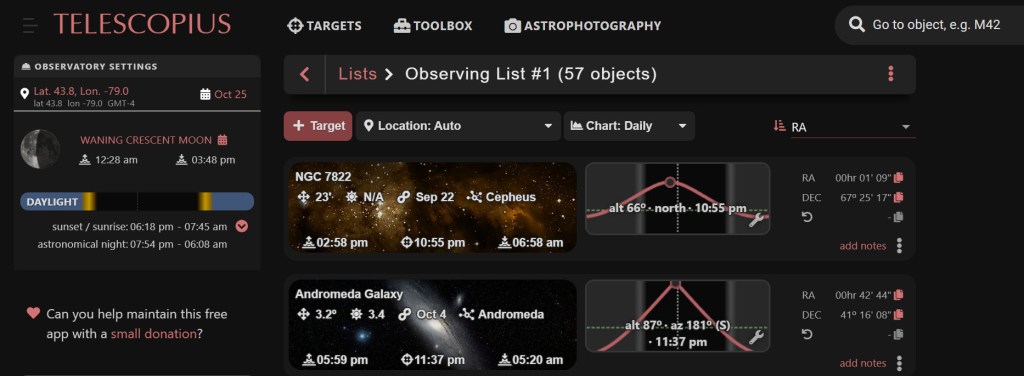
There is also the challenge of working against the weather, the monthly moon cycle and the seasons in general, which for many of us, can be very frustrating. But when you get that one, two, three clear nights, there really is nothing more satisfying than looking up at the night sky and wondering what you will capture tonight. And also wondering who might be looking back at us.

Astrophotography is by far the growing trend in astronomy. But I admire visual astronomers as well, who don’t usually use much automation, and rely on their own brains to direct their outdoor telescope activities. They set up their telescopes typically without any electronics or even power, manually star-hop from one bright star to another to try to line up the scope just right, select an eyepiece to use for just the right magnification of the object they are interested in, and hope it is bright enough and stable enough in the night sky to see it.
There is a big difference between looking through an eyepiece on a manual scope, and holding the shutter on a camera open for 3-5 minutes on an astro camera. If you have ever tried looking through the viewfinder on a camera on Earth at night vs. using “bulb mode” to capture an image for 30 seconds or more, you realize that the light gathering ability of the sensor is so much better than your eyes. But this is how astronomy used to exclusively be done, and it still provides amazing “wow” experiences for those who indulge it.
But a whole new crowd has now entered the hobby. Everything changed with modern astronomy cameras, computerized control boxes and software. Now anyone can play. And do it fairly easily and enjoyably. That more than anything else is why the hobby has exploded.
One bit of evidence of that explosion is a business started by an enterprising young engineer, who is also an astrophotographer, Bray Falls. Because of worsening weather issues in many parts of the US, some clever folks came up with the idea of setting up remote observatory farms, where people could send their telescopes with the promise of 95% clear skies, and operate them remotely. This is not new – there are many such farms around the world. But this too has exploded because of the rise of automation, faster internet speeds, and lower costs hobbyists can now more easily afford.
Bray and his friends decided to open a remote observatory in Texas, offering lower cost options than some of the bigger farms. Within two years, they have 5 separate buildings, each capable of housing around 60-70 scopes, with around 4 new scopes being installed each day. Those scopes belong to people like you and me, not to high end academia.


The other contributor to the explosion of interest is the ease of access to help and guidance now. You don’t need to know a professional astronomer. You can join any of a variety of forums like Cloudy Nights and Astrobin and other online groups, as well as get step by step instructions from YouTube or dedicated websites like Adam Block Studios. In fact, there is so much help available now that you really have to carefully assess what is useful to you and what isn’t. That was a big ah-ha for me.
And of course, you can join an astronomy club. Astronomy clubs have always had a tradition of outreach and encouragement of new interest in the hobby. But outreach events might reach 25-50 people at a time, rather than the hundreds or thousands that can access detailed information online and get almost instant answers to questions. Astronomy clubs also offer access to dark sky sites and often to equipment to borrow, which is awesome, but new equipment and techniques available in the hobby now make it possible to image from almost anywhere. You don’t need to drive hours to a dark sky site – although nothing really beats seeing the Milky Way as it was meant to be seen – in all its glory under a deep black sky.
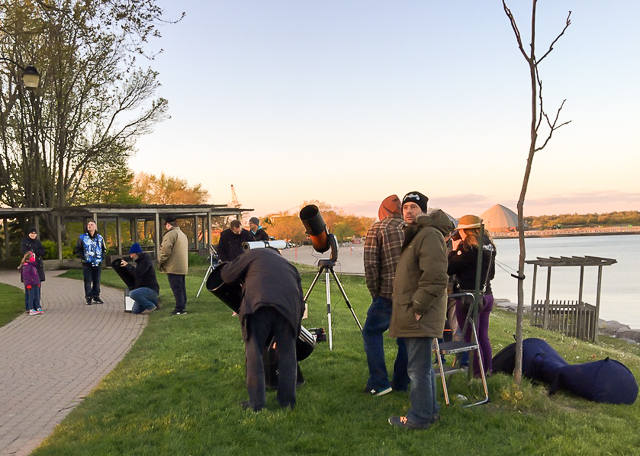
Image capture is one half of the equation – image processing is the other half. And that too has been simplified in the last few years. Software that previously required advanced knowledge and techniques now includes one button-press tools to automate complex tasks. Vendors of astrophotography equipment now offer their own laptop-based imaging suites, making it even easier to gather and process images. But again, if you want the extreme experience, the image editing tools available for this hobby and generally now enable you to pixel-peep to your heart’s content, supported by artificial intelligence.
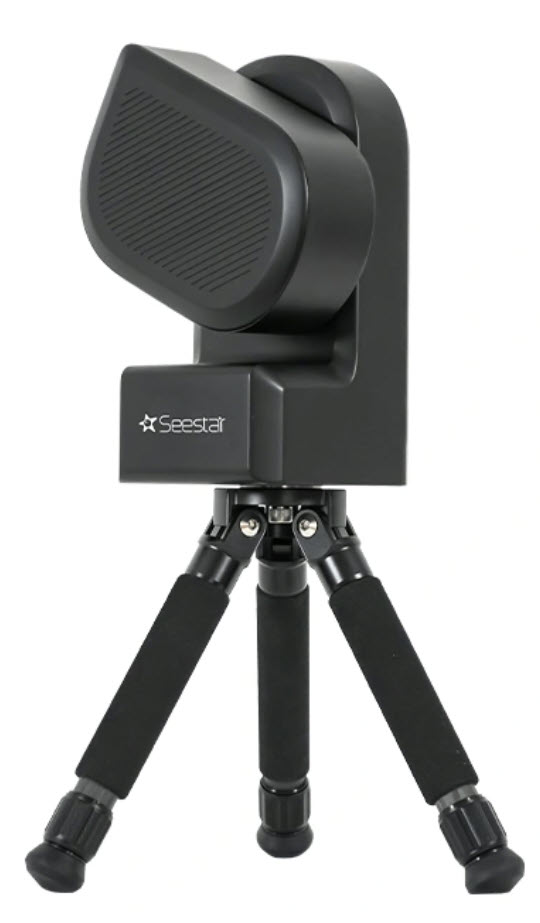
And perhaps the most important development has been the introduction of consumer-priced “smart telescopes” that do almost everything for you. They have GPS to make star-gazing easy, they locate and “go-to” an object of interest that you may wish to photograph, they select the settings, track the object as it moves across the sky, and process/stack all the resulting images into one final result to enjoy.

So it seems “the stars have aligned”, pardon the pun, to make this the perfect time to take up the hobby of astrophotography. You can easily get advice and assistance, a full range of equipment for any budget, opportunities to shoot from almost any location, and an increased likelihood that with a little education and effort, you will end up with a great result. You don’t need to be a PH.D. in astrophysics anymore. But just a little bit geeky will certainly fire your curiosity. Who knows where it will take you.
 oldgirlphotography.ca