
There is a raging debate right now among pro and hobbyist photographers alike about where to draw the line when editing images. Of course, this stems from the other big debate around the role of AI (artificial intelligence) in photography, but comes at it from a different slant.

Some time ago, Samsung was accused of faking a moon image to demonstrate the new low light (or was it astro?) features of its latest smartphone. Samsung’s response was that nothing is “real” in photography anyway so what does it matter?
What does it matter?
I’m not going to repeat the debate or the numerous points of view defining what is real in photography. All I can do is give you my own decision on where I draw the line. It’s pretty simple for me.

If an image is created without any light passing through a lens and hitting a sensor (or film if you are one of those), it is not a photograph.
If I didn’t take the image by pressing the shutter to pass light through a lens to hit a sensor (not film for me), it is not my photograph. It might be art, it might be digital graphics, but it is not my photograph.

“Real” for me begins at that shutter press. I do agree though that the capture is not a depiction of exactly what existed around me at that point in time, but that’s also not the definition of real for me. I agree that I absolutely limit the composition, including some things and excluding others. I agree that I manage the light, exposing for the effect I want to achieve. I agree that the light photons hit the sensor and are interpreted by the electronics into meaningful data, but it is an interpretation. I agree that I further convert that data using software into an image I can see. All of that is not debated and does not factor into the discussion of real – not for me.
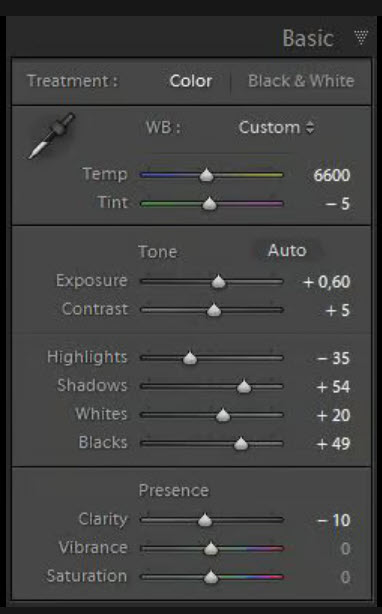
The debate often gets heated at the next step – moving that first slider in any editing software. Again, I agree that I am changing the image – at least the RAW converter’s interpretation of the image – by moving sliders, adding adjustment layers and playing with colour mixes and tonal values. Again, none of that make a bit of difference to me in defining “real”.

Here’s where it does get interesting though. I will also remove distractions at this point – protruding branches, garbage bins on street corners, people in landscape images – if the message I wish to convey with the image is diminished because of their presence. If the story I want to tell doesn’t include them, out they go. No different than any artist in any medium who makes choices about presentation.
In my case though, the element removed is replaced by something else that also existed in the image, not by a new element that never existed in the scene. That’s my line in the sand.

Well, that’s true except for one thing – skies. I fully admit that I have replaced a bland sky with an interesting one, one that fits the mood and story better. For the most part, but not always, these replacement skies are skies I have photographed personally, but just not at that time or place.
Have I betrayed my own virtues? Maybe. Does it matter? Not at all. The resulting image is still real to me, conveying an emotion that could very well easily exist in that place at some point in time. That I did not capture it all at once is of absolutely no concern to me. Again, no different than any artist in any medium who makes choices about presentation.

But that is as far as I go. The new generative fill technologies that will create any element wished for in an image has no role in my creativity. I don’t think it ever will. I know that I will always have to have a hand in framing and capture, as well as in image treatment. Generative fill takes that away. I don’t have any principled objection to the technology – its use just reduces my personal experience and satisfaction with my own art, so I find that for the most part, I ignore it.
But the debate has gotten a bit ridiculous, especially in terms of contests and competitions. The number of restrictions that are now present in contests is frankly silly. When I view other people’s photographic art, I honestly don’t care how it was created, unless they are representing it in a specific way. If the claim is that the image resulted from weeks standing in a swamp waiting for a creature to appear, it better have been weeks and the creature better not have been created on a computer. Beyond that (and journalistic integrity in the news), I honestly don’t care how other people’s images are produced. What’s important is whether the image speaks to me.
I never make any journalistic claims for my work; each one is simply art, but each one is still “real” to me. I make it to capture a memory, a feeling, an experience. The way I present it helps you visually experience what I experienced with all of my senses. And from time to time, that means adding in a new sky. All very real to me.
 oldgirlphotography.ca