
I love to learn. Have all my life. And the winter season is a great time to learn new things, since most of us are stuck inside.

I’ve been concentrating on two paths of learning this winter: astrophotography image processing, and architectural image processing. The first deals with doing the utmost to ensure good image quality and colour representation in the tiny objects photographed in the sky. The second deals with adding tone, contrast and artistic adjustments to architecture to turn them into works of art (beyond the work of art that the architect already produced).
Both paths have brought me in touch with several teachers, respected in their fields. But they could not be more different in their teaching styles. One of the challenges I’ve had has been finding a teaching style that gives me the right learning experience for me.
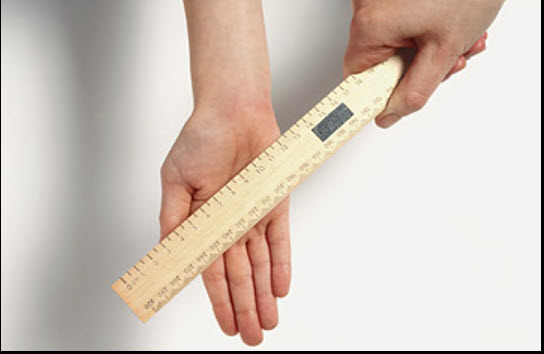
I grew up in an age of disciplinary education. You memorized, you recited and you regurgitated what was given to you. No question of teaching style – no option for learning the way you learn best. I had teachers who repeated the textbooks, teachers who barely opened the textbooks and everything in between. Since I enjoyed learning, I made the most of it and taught myself mostly. So it worked out in the end. But it did define a path of expectations for me – to make a teacher worthwhile to listen to, I needed very specific things. Otherwise, I would just do it myself.
That has held true to this day.
Astrophotography can be both a very artistic hobby and a very technical hobby at the same time. To be successful, you need to dabble in both. I went looking for teachers that did exactly that.

The most respected names in this field are often the inventors of one of more techniques to capture and process images (example above: Spectrophotometric Color Calibration). As such, they have almost infinite details at their fingertips on how to apply their techniques. Some feel it necessary to explain every adjustment, every slider, every gradation on the scale, and every message resulting from the application of their technique. While I appreciate that for problem solving purposes, I struggle with it for everyday application. I assume if I follow their steps, it will work. Don’t always need to know why.
Other respected names are more liberal, simply telling me what tools to use and what settings to apply. For purposes of establishing a repeatable workflow, this is good, but leaves me a bit lacking in understanding. You might think photographic processing is photographic processing – once you are comfortable with Photoshop, you can deal with anything else in any other world. Not so in astrophotography – you might run into diagnostic messages like the one below. So I need more from an instructor than a sequence of what key to press.

I found one instructor who decided to create multiple paths – basic, intermediate and advanced – each one building on the previous, with more detail and explanations. It has turned out to be the perfect plan for me. And it addresses an old trope that repetition is the key to success. Three reps are better than one, in this case, each with a bit more information.
My architectural photography journey has been a bit different. Over the past several years, I’ve discovered photographic artists whose work blows me away. My jaw drops every time I see one of their images. So I follow them religiously and when they offer a course or a workshop, I sign up.

It turns out here, though, that my interest is not in their processing techniques, but in their thought processes. Well, mostly. I definitely wanted to know how they achieved the tone, texture and depth in their finished photographs, and have studied those techniques when offered. From that perspective, the same comments apply here as for astrophotography: some teachers feel it necessary to show and explain every detail, even going to the point of inventing their own tools for the purpose, while others are more liberal in their teaching styles and assume you understand the tools. Both will walk students through a finished image, showing all the layers and adjustments that went into making the image. For some, this takes an hour, for others 5 minutes.
But because I’m now at a point where I understand most of the available standard tools, I’m more focused on the artistic thought process and creative decisions. Finding a teacher with that focus has proven to be more difficult than expected.

How do you communicate artistic vision? I understand that can be difficult. So of the teachers I’ve connected with, I don’t hesitate to ask “what were you thinking” when you saw this? Some laugh, but some hesitate, not sure how to answer. It seems clear they don’t get asked that very often as photographers. Strangely, I’ve also had a few comments from classmates attending the same sessions asking WHAT I WAS THINKING when I asked, because they thought it was somehow insulting to ask. It seems that asking for an explanation of intent is somehow more threatening than asking “how did you do this”, or the ubiquitous “what camera do you use”?

I am first and foremost a technically-minded person. Artistic expression is very hard for me. Understanding someone else’s intent helps enormously. But it seems in a teaching session, the focus is usually elsewhere. So I’m still looking for the right experience in that regard. Strangely, art galleries excel at this – go to any art exhibition, meet the artist, and almost the whole discussion is about intent. Not so for photography. I find that very interesting.
With so many methods and options for learning now, anyone can find the best educational experience for them. Just do a search on Learning Resources for kids and you will find out what I mean. For us older folk, it might be YouTube, it might be online conferences, either recorded or live, it might be hands-on workshops. But it’s not just the method of delivery and the quality of the examples. It’s the story you are being told as well. Take a few minutes to consider the learning experiences that have impacted you most and why that was. Are you process-focused or do you want to get inside the head of the instructor? Don’t connect with a teacher just because of their name or reputation. You will be much happier when you find the right one for you.

 oldgirlphotography.ca
Great blog, as always and so true. Some teachers can keep me so inspired and others will put me to sleep. You my friend, are a great teacher.
LikeLike